
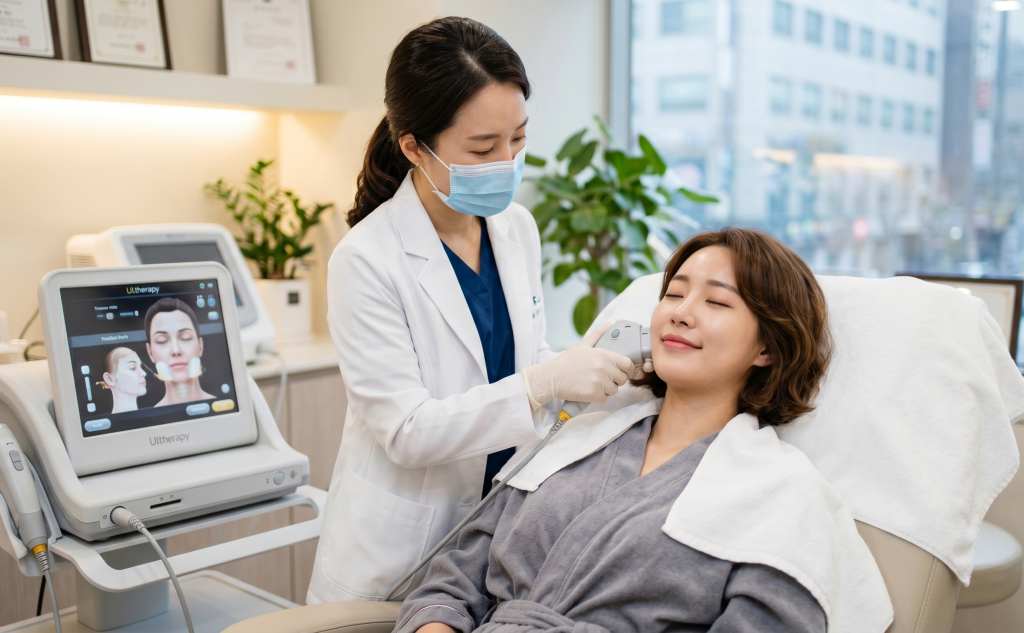
Medical Tourism Korea: The Skin Care Advantage (2026 Guide)
Medical Content Reviewed by MTK Editorial Team | Updated: June 2026
Booking note: All clinics mentioned in this guide are bookable through MTK (Medical Travel Korea) — Korea's official Google Reserve partner — with dedicated language support and transparent upfront pricing matrices included.
MTK Safety & Transparency
- Transparent, hospital-standard pricing — no foreign markups, no hidden administrative fees
- Every clinic in the MTK network is a Registered Foreign Patient Attraction Institution under Korean law
- Dedicated language support with interpreters experienced in clinical terminology included with your appointment
Quick answer: Korea is the world's leading destination for skin care Korea and aesthetic dermatology — and patients choose it because of three things no other market consistently delivers together: fast adoption of clinical devices (Ultherapy, Thermage FLX, picosecond lasers), a dermatologist culture built around natural-looking micro-refinements, and a mature medical tourism Korea infrastructure that makes Korea medical travel straightforward, handling language support, pricing transparency, and safety for international patients at scale. The MTK network is built around clinics that hold the Ministry of Health and Welfare's Registered Foreign Patient Attraction Institution registration — the clearest marker of a genuinely foreigner friendly hospital Korea offers — meaning a verified, institutionally accountable option exists across every specialty, area, and price point in Seoul, featured in no particular order of preference.
What's in this guide:
- Why patients choose Korean skin clinics — with real numbers
- The core treatments worth knowing before you go
- Korea vs. other medical travel destinations: an honest comparison
- How MTK's four-step patient flow works — and what each step protects
- Tips for planning your trip around treatment downtime
- FAQ covering the most common pre-trip questions
Why Patients Choose Korean Skin Clinics
Choosing a skin clinic Korea destination means accessing the world's fastest-moving aesthetic dermatology market.
Technology Adoption Speed
Korea's dermatology market is the fastest in the world at integrating new energy-based platforms. Devices like Thermage FLX, Ultherapy Prime, InMode, and picosecond laser arrays typically reach certified Korean clinics months before they become widely available in other regional markets. Because patient volume remains high, Korean doctors accumulate substantially more hands-on experience per device in the early years after launch.
The "Subtle Refinement" Aesthetic Standard
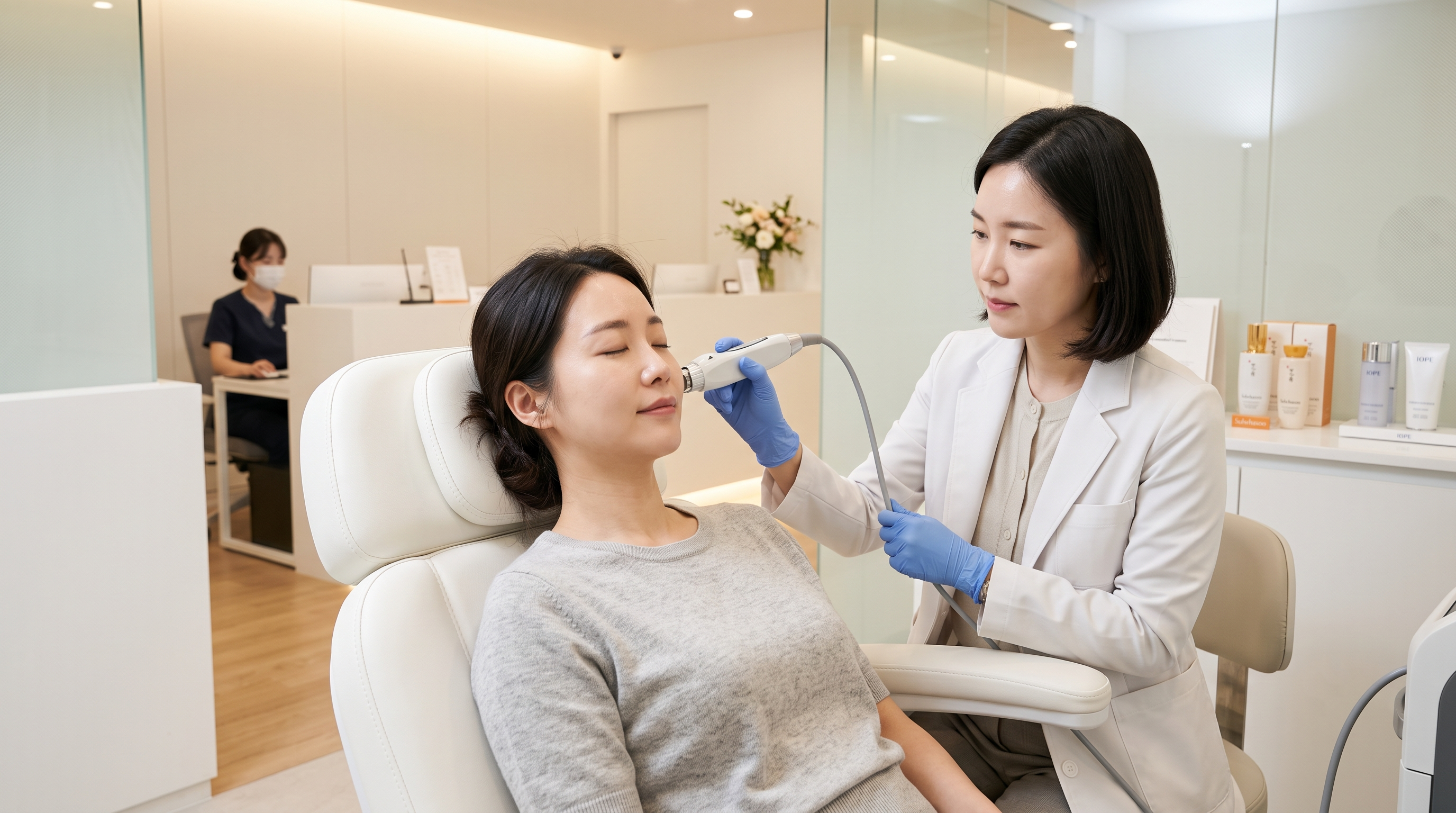
The core goal of Korean dermatology is a naturally refreshed look, focusing on skin quality enhancement rather than dramatic alterations.
Korean skin care clinics and dermatology Korea specialists operate under a distinctly different aesthetic philosophy. The goal is a refreshed, naturally younger version of yourself — enhanced skin quality and structural contours without making it obvious a procedure was performed. Doctors here are specifically trained to under-treat rather than over-treat, and the culture of necessary treatment only is something patients consistently notice when comparing their Korean clinic experience to consultations at home.
A Mature International Patient System
Korea's medical tourism infrastructure is not an afterthought — it's a core part of how the industry is structured. The Ministry of Health and Welfare designates clinics as Foreign Patient Attraction Institutions based on patient safety, service standards, and international patient readiness. This designation is one of the most reliable screens available — and the MTK network is built exclusively around clinics that meet this standard. This means international patients have genuine vetted choices across multiple specialties, areas of Seoul, and price points. Furthermore, this verified framework extends seamlessly to major coastal wellness capitals, allowing patients to experience premium skin clinics in Busan as an elite regional holiday alternative.
Korea vs. Other Medical Travel Destinations
| Factor | Korea | Japan | Thailand | United States |
|---|---|---|---|---|
| Latest device availability | Fastest globally | a 6-to-12-month period behind Korea | Variable | a 6-to-18-month period behind Korea |
| Specialist density | Very high (Gangnam alone has the highest concentration of aesthetic dermatology clinics in Asia) | High, with regional focus | Moderate | High, but significantly higher cost |
| Aesthetic philosophy | Natural micro-refinement | Conservative | Variable | Higher tolerance for dramatic results |
| Language support | Dedicated coordination channels | Limited in local prefectures | Widely available | N/A |
| Price vs. quality ratio | Strong verified baseline | Good but expensive | Lower cost, more variable quality | High cost |
| Infrastructure | Fully institutionalized and audited | Limited international focus | Growing networks | Not designed for inbound |
Korea's primary advantage over alternative markets is quality consistency. As K-beauty treatments gain global recognition, certified specialist credentials, and rapid technological adoption. Compared to high-threshold western markets, the same protocols executed by board-certified specialists using authentic equipment typically allow international patients to optimize costs by 40% to 60% within transparent clinical environments.
The Core Treatments Worth Knowing

Advanced energy-based devices like Ultherapy and Thermage are standard configurations across verified Korean clinics.
These are the treatments most frequently requested by international patients across the MTK network, profiled in no particular order of preference.
| Treatment | Mechanism | Downtime | Best For |
|---|---|---|---|
| Ultherapy Korea / Ultherapy Prime | Focused ultrasound lifts the SMAS layer — the deepest structural tissue layer — stimulating collagen from within. The premier FDA-cleared non-surgical lift. | 3-to-7-day mild swelling | Sagging jawline, neck, non-invasive brow lift |
| Thermage FLX | Monopolar radiofrequency firms deeper skin layers by heating the dermal matrix, instantly smoothing surface laxity. | Minimal (1-to-3-day redness) | Skin laxity, surface firmness, delicate eye area |
| Thread Lifting | Absorbable suture threads physically reposition sagging tissue. Results visible immediately, while collagen stimulation continues for months. | 5-to-7-day swelling | Lower face sagging, jowls, midface realignment |
| Rejuran Healer | Polynucleotide (PN) injections derived from purified salmon DNA regenerate the skin barrier and elasticity from within the dermis. | a 24-to-48-hour window of pin marks | Dehydrated skin, fine lines, damaged barriers |
| Juvelook / Juvelook Volume | PDLLA collagen stimulator that gradually restores structural volume and improves texture over 4-to-8-week cycles. | Minimal next-day resolution | Volume loss, fine lines, gradual anti-aging |
| Potenza (RF Microneedling) | Radiofrequency delivered through micro-needles targets pores, acne scars, and uneven texture with precision. | 2-to-4-day redness | Enlarged pores, historic acne scars, texture |
| Picosecond Lasers | Ultra-fast laser pulses fragment deep melanin pigment clusters for melasma and spots without surface heat damage. | 0-to-2-day of fading | Stubborn melasma, dark spots, pigmentation |
| BBL HERO | Advanced broadband light treats pigmentation and redness across wide areas faster and more powerfully than standard IPL. | 1-to-3-day | Sun damage, facial redness, overall tone |
| Agnes | A targeted RF probe ablates individual sebaceous glands to calm acne breakouts at the root source. | 3-to-5-day | Chronic, stubborn acne unresponsive to topicals |
| InMode / InMode FX | Radiofrequency fields target subcutaneous localized fat while simultaneously tightening skin boundaries. | 1-to-5-day depending on area | Face firming, mandibular fat, double-chin |
Skin Booster and Thread Lifting are among the most widely available treatments for international patients across our audited networks.
How MTK's Patient Flow Works: Four Steps, Zero Gaps
The two friction points most international patients worry about are language barriers and unverified pricing. MTK's booking system is structured to eliminate both through four rigid validation phases:
Step 1 — Secure Booking with Pricing Transparency Matrix
MTK continuously audits its connected clinic network to ensure transparent upfront pricing matrices with zero hidden markups. When you book through MTK, the price you see reflects transparent, hospital-standard pricing confirmed before you arrive.
Step 2 — The Doctor Responsibility System
MTK enforces a strict Doctor Responsibility System: the board-certified specialist who conducts your diagnostic tissue assessment is required to be the same doctor performing your procedure. Physician substitution post-consultation is strictly prohibited within the network.
Step 3 — Product and Device Transparency
For all injectable boosters or brand-name energy device consumables, you have the right to request that medical staff unbox and verify original product serial codes in front of you inside the treatment room. This confirms genuine products and authentic shot delivery parameters.
Step 4 — Dedicated Language Support
MTK pairs your reservation with dedicated language support. Your interpreter—experienced in clinical terminology—accompanies you through the diagnostic process, clinical briefing, and written aftercare instructions, ensuring medical nuance is fully preserved throughout. This is what genuinely distinguishes an English speaking hospital Korea option from one that merely advertises international-friendly service.
To review our verified master directory bookable through this system — covering Gangnam, Myeongdong, Hongdae, and more — see: Top 15 Skin Clinics in Korea for Foreigners (2026).
How to Choose the Right Clinic for Your Concern
Each aesthetic clinic Korea destination in Seoul operates under clear specializations. To maximize your outcome, align your precise skin issue with matching clinical focus areas:
- Structural Lifting Specialist Teams: These centers invest in extensive HIFU and RF fleets (Ultherapy Prime, Thermage FLX) and typically limit daily caseloads to ensure sufficient doctor time per session.
- Pigmentation & Melasma Specialist Teams: These centers center their investment around picosecond lasers and broadband light systems. Their doctors have specific experience in calibrating energy frequencies across diverse global skin tones.
- Advanced Acne & Scar Specialist Teams: These institutions prioritize root-cause diagnosis, deploying targeted micro-probes like Agnes alongside ablative resurfacing rather than surface-treatment-only approaches.
- Skin Booster & Regenerative Centers: These facilities focus on injectables (Rejuran, Juvelook, Exosomes) and hydration protocols, making them practical choices for routine maintenance or travelers with brief itineraries.
Planning Your Trip Around Treatment Downtime
Zero to Minimal Downtime: Laser toning, Botox, and other basic skin treatment Korea procedures like skin boosters, and light picosecond sessions slot around active holiday sightseeing without issue.
Moderate Downtime (a 2-to-5-day window of pin marks or mild swelling): Rejuran, Juvelook, Potenza RF, and Agnes protocols. Schedule these for the opening days of your trip to allow initial skin settling before major activities.
Higher Downtime (a 5-to-10-day window of swelling or potential bruising): Ultherapy, Thermage FLX, or Thread Lifting. Time the treatment for the final phase of your trip before flying home — artistic collagen remodeling continues to build over 2 to 4 weeks regardless.
To optimize travel efficiency, many savvy international patients choose to cross-schedule multi-disciplinary treatments. Korea's reputation extends well beyond dermatology — the same infrastructure that makes it the best plastic surgery in Korea destination, with dense concentrations of board-certified surgeons at any Korean plastic surgery clinic in Apgujeong, also supports pairing cosmetic dermatology healing timelines with advanced specialist medical care (such as SMILE Pro vision correction or digital navigation dental implants) or concluding an intensive aesthetic regimen with deep systemic detox at accredited Korean traditional medicine hospitals.
Practical safety reminders:
- Apply a broad-spectrum SPF 50 mineral sunscreen daily — post-treatment skin layers maintain elevated photosensitivity.
- Your MTK interpreter will walk through all personalized aftercare instructions with you before you leave the clinic zone.
- When you book through MTK, our international support desk coordinates remote recovery check-ins via major digital networks after you return home.
Frequently Asked Questions
Is Korea safe for skin treatments for foreigners?
Yes, provided you book with certified institutions hosting board-certified specialists and valid Foreign Patient Attraction Institution documentation. MTK filters out high-volume assembly-line clinics, linking exclusively with certified centers that verify specialist credentials and follow strict safety guidelines.
How much does Ultherapy cost in Korea?
Pricing reflects exact shot count requirements, treatment zones, and individual clinic parameters. MTK transparent upfront pricing matrices confirm you are quoted standard upfront rates with zero foreign premiums or hidden surcharges.
Do I need to speak Korean to visit a skin clinic?
No. While basic software manages entry at some facilities, advanced consulting demands precise communication. MTK addresses this boundary by providing dedicated language support with interpreters experienced in clinical terminology accompanying your reservation to safeguard all medical nuances.
What's the best area in Seoul to stay for a dermatology trip?
Myeongdong is central and accessible for day-trip clinical maintenance. The Gangnam district (including Cheongdam, Apgujeong, Sinsa) hosts the primary concentration of premier specialist boutique clinics for intensive anti-aging or advanced device combinations. Full regional breakdown featured in no particular order: Top 15 Skin Clinics in Korea for Foreigners (2026).
Can I combine multiple treatments in one visit?
Often yes, many non-ablative platforms integrate safely with skin boosters in a single session. However, your board-certified dermatologist will assess your skin map and space high-energy treatments if combining presents risks to your epidermal barrier.
What is Google Reserve and why does it matter?
Google Reserve integrates verified appointments directly inside Search and Maps. As Korea's official partner, MTK links your reservation through an authenticated Google pathway, providing travelers with verified, transparent booking channels that eliminate informal broker configurations.
How much does skin care cost in Korea?
Costs vary by treatment type and clinic model. Basic maintenance treatments such as skin boosters or laser toning typically start from a fraction of equivalent Western pricing, while premium device sessions (Ultherapy, Thermage FLX) can offer 40-to-60 percent savings compared to the same procedures in the United States or Australia. MTK's transparent upfront pricing matrices let you compare exact costs before booking, with no hidden surcharges or foreign markups.
Is Korean skin care better than Japanese?
Both countries have excellent dermatology standards, but they serve different patient profiles. Korea leads in aggressive device adoption, with clinics deploying the latest energy-based platforms (HIFU, RF microneedling, picosecond lasers) months before other markets. Japan's strength is conservative, long-term skin maintenance. For international patients seeking visible anti-aging results, acne scar revision, or pigmentation correction within a short trip window, Korea's device density and dedicated foreign patient infrastructure typically offer a more efficient outcome per visit.
Explore Seoul Ophthalmic & Advanced Aesthetic Guides
Planning additional treatments within the capital? Browse our curated master clinical directories for Seoul:
- Best Eye Clinics in Gangnam, Seoul: Vision Correction & Cataract Surgery Guide (2026) →
- Best Plastic Surgery & Anti-Aging Clinics in Apgujeong, Gangnam (2026) →
- Best Myeongdong Skin Clinics in Seoul (2026) →
- Top 15 Skin Clinics in Korea for Foreigners (2026) →
- Hair Transplant Korea: FUE & Non-Shave in Gangnam (2026) →
- Dental Clinic Seoul: Veneers, Implants & Teeth Whitening Korea (2026) →
- Breast Augmentation Korea: Gangnam Implant & Fat Transfer (2026) →
- Top Skin Clinics in Hongdae, Seoul (2026) →
- Top 15 Dental Clinics in Korea for Foreigners (2026) →
Go Deeper: Device & Protocol Guides
Want to understand the technology behind these treatments before booking? Explore our clinical deep-dives:
- Korean Glass Skin: Energy Devices & Skin Boosters Synergy Mapping →
- Dull Skin to Glass Skin: Gangnam's Clinical Brightening Protocols →
- Ultherapy vs. Shurink in Korea: A Clinical Guide to Non-Invasive Face Lifting (2026) →
Health, Wellness & Recovery Guides
Planning a broader medical trip beyond skin care? Explore these companion guides:
Regional Deep-Dive: Busan Medical Travel Guides
Expanding your recovery itinerary beyond Seoul? Review our verified regional directories for Busan:
Aftercare Guides by Specialty
View recovery instructions for post-procedure care in Korea:
Medical Disclaimer: This guide is for informational purposes only. Always verify registration status only and does not constitute medical advice. Treatment suitability varies by individual. Always consult with a licensed medical professional before booking any procedure. Clinic data is verified through the MTK network; featured institutions are listed in no particular order of preference.
Ready to book? Visit medicaltravelkorea.com to get started.