
Korean Traditional Medicine in Busan, Korea: A Practical Guide for Foreign Patients (2026)
Medical Content Reviewed by MTK Editorial Team | Updated: June 2026
Booking note: Both clinics in this guide are bookable through MTK (Medical Travel Korea), an official Google Reserve partner. MTK exclusively indexes Foreign Patient Attraction Institution–certified facilities. Every booking guarantees transparent, hospital-standard pricing confirmed before you arrive, with no hidden broker fees or markups, and dedicated language support with interpreters experienced in clinical terminology is provided upon request.
Quick answer: The two foreigner-friendly traditional medicine options in Busan are Busan Jaseng Hospital of Korean Medicine (non-surgical spinal care, 15 minutes from Gimhae Airport, integrated East-West diagnostics) and Natural Korean Medicine Clinic (sports rehabilitation for professional athletes, personalized 8 Constitutions metabolic programs, private inpatient recovery rooms). Both hold official Foreign Patient Attraction Institution certification and are part of the broader medical tourism Korea network that makes Korea medical travel straightforward for international patients. Clinics are featured in no particular order of ranking or preference.
What's in this guide:
Clinics and directories in this guide are evaluated based on independent medical parameters and listed in no particular order of ranking or preference.
- Why Choose Busan for Korean Traditional Medicine
- Accreditation: What to Verify Before You Book
- Clinic Profiles: Busan Jaseng & Natural Korean Medicine Clinic
- Hanbang vs. Western Medicine: Key Differences
- Core Treatment Reference Table
- Concern-to-Clinic Matching Matrix
- Recovery in Busan: Traditional Healing and Coastal Rest
- How MTK's Four-Step Patient Flow Works
- Frequently Asked Questions
Why Choose Busan for Korean Traditional Medicine
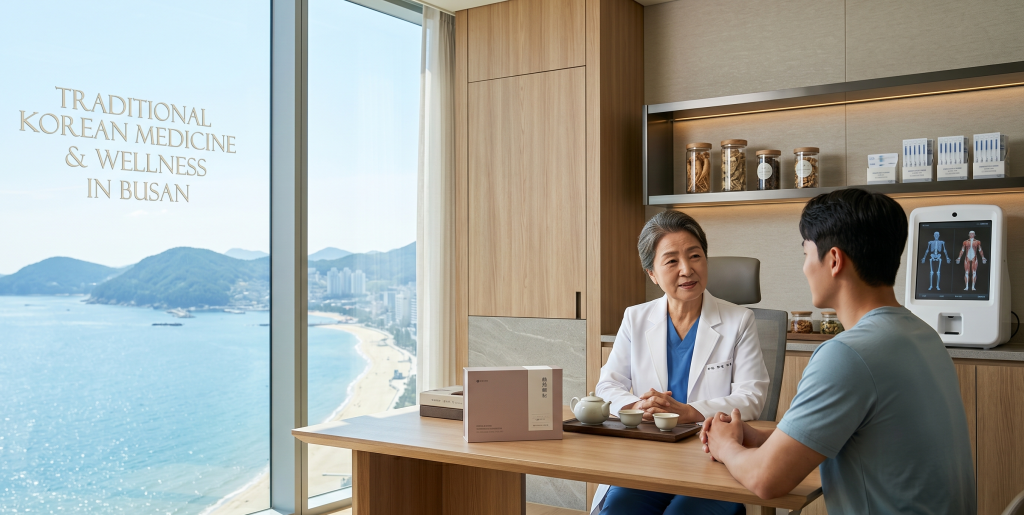
Busan has developed a strong traditional medicine infrastructure, particularly for spinal rehabilitation, sports injury recovery, and metabolic programs. The main clinics are located in Saha-gu (near Gimhae Airport) and Yeonje-gu — both accessible from the city center.
For international travelers, Busan's traditional medicine clinics offer competitive pricing compared to Seoul equivalents and are experienced at designing compressed treatment programs for patients visiting for a limited time. If you're combining Korean medicine with other treatments during the same trip, Busan's aesthetic clinics and specialist medical centers are within the same transit network.
Accreditation: What to Verify Before You Book
The Ministry of Health and Welfare designates traditional medicine clinics as Foreign Patient Attraction Institutions based on certified specialist staff, standardized sterilization protocols, active malpractice insurance, transparent pricing, and multilingual consultation capability. Both clinics in this guide hold this designation.
Clinic Profiles
Note: Clinics are listed in no particular order of ranking or preference.
Busan Jaseng Hospital of Korean Medicine — Saha-gu
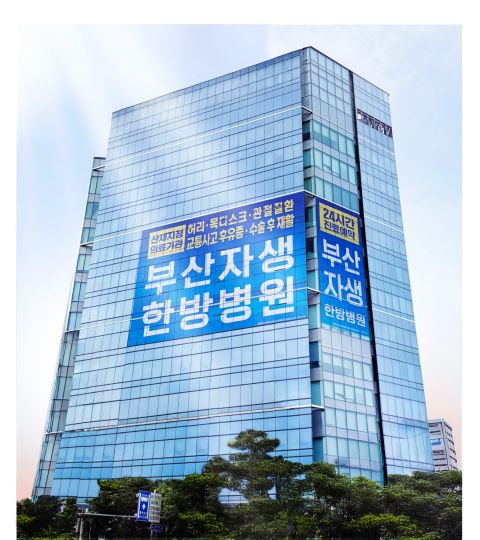
Busan Jaseng Hospital of Korean Medicine is located 15 minutes from Gimhae International Airport — a practical advantage for international patients combining a Busan trip with medical treatment. The hospital specializes entirely in non-surgical spinal and musculoskeletal conditions: herniated discs, spinal stenosis, joint degeneration, and chronic back and neck pain.
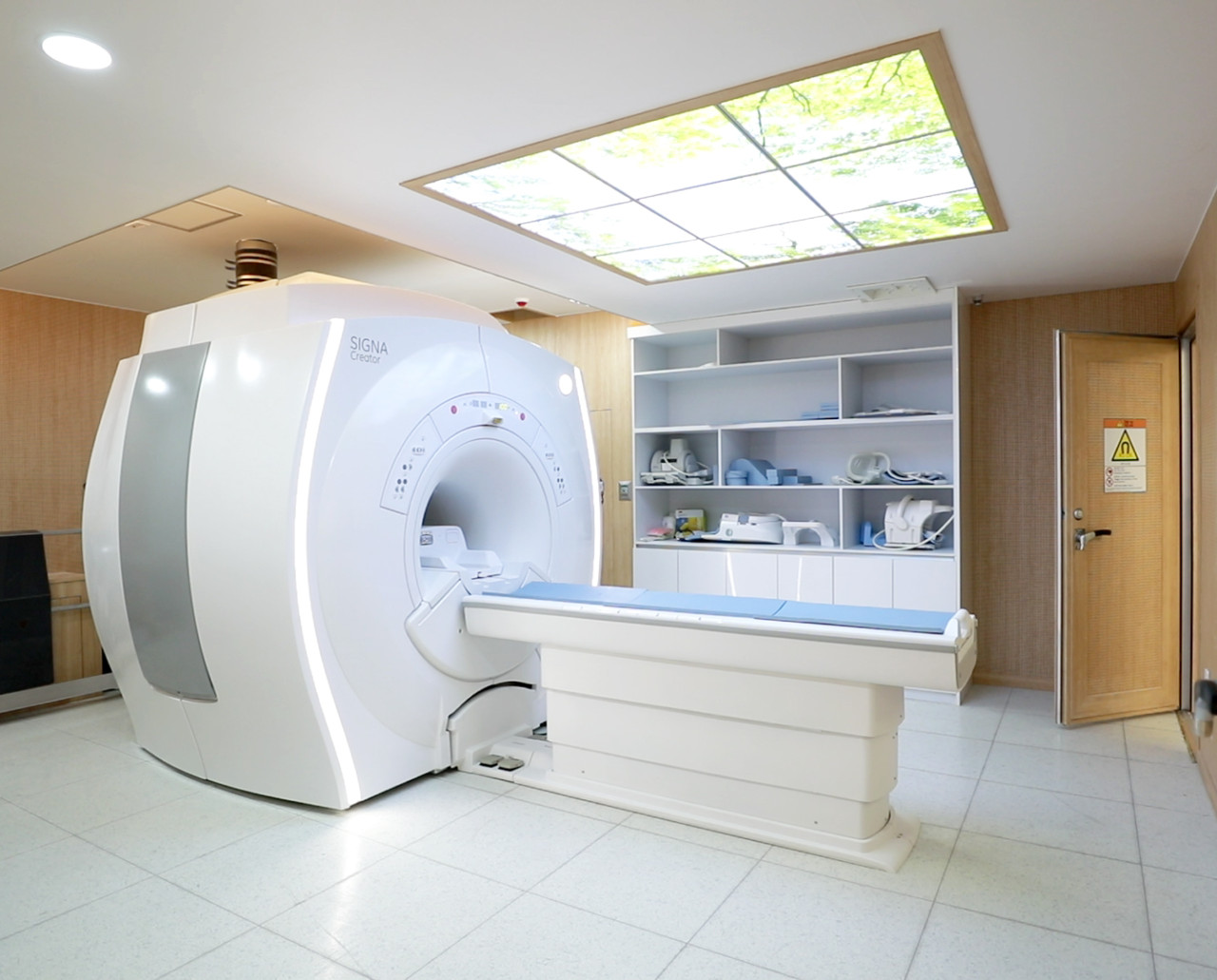
The hospital director has over 10 years of experience managing international patients, with approximately 2,000 foreign patients treated annually. On-site diagnostic imaging includes X-ray, MRI, and DITI (digital infrared thermal imaging), allowing traditional physicians to review objective radiological data before planning treatment. International patient services cover booking, visa support, interpretation, and airport pickup in a single coordinated system.
Signature treatments include Chuna manual therapy (structural adjustment technique developed by the Jaseng network), Shinbaro pharmacopuncture (purified herbal extract injections targeting nerve inflammation), and Motion Style Acupuncture Treatment (MSAT), which combines acupuncture with guided patient movement to unlock acute muscle restrictions. The workflow is fully integrated with MTK's dedicated language support, featuring interpreters experienced in clinical terminology for accurate clinical reporting.
- Best for: Non-surgical herniated disc treatment, spinal stenosis, chronic neck/back pain, airport-convenient access
- Signature treatments: Chuna manual therapy, Shinbaro pharmacopuncture, bee venom therapy, MSAT, standardized herbal medicine, integrated East-West diagnostics
- Address: 1427, Nakdongnam-ro, Saha-gu, Busan, Korea
- Hours: Mon–Fri 09:00–20:00 | Sat 09:00–18:00 (Closed Sun, Lunar New Year, Chuseok)
Book through MTK for transparent upfront pricing matrices and dedicated language support with interpreters experienced in clinical terminology upon request.
Natural Korean Medicine Clinic — Yeonje-gu (Yeonsan)
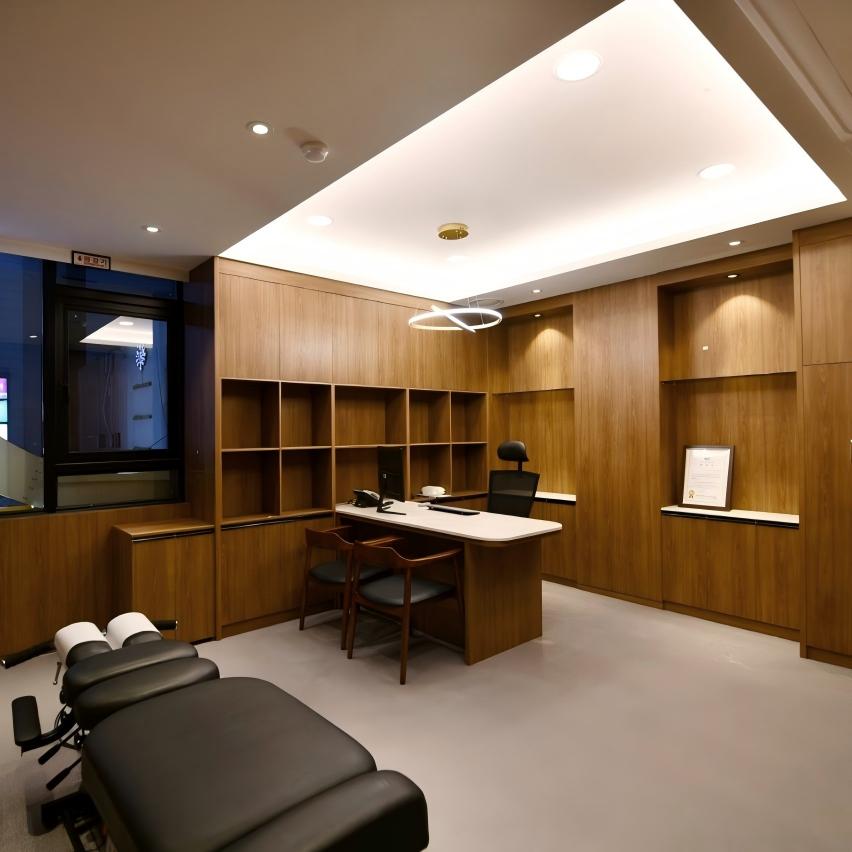
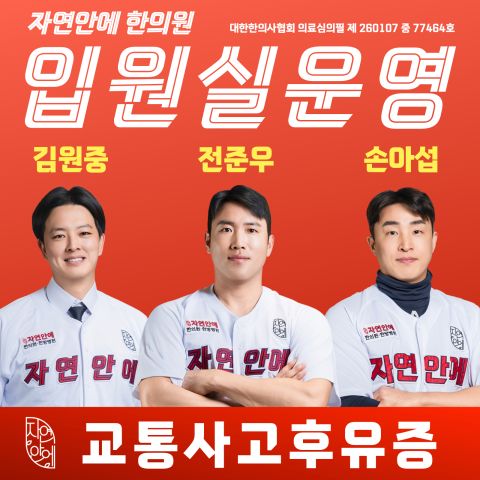
Natural Korean Medicine Clinic is an official teaching clinic in Yeonje-gu that specializes in sports rehabilitation, Chuna structural adjustment, and private inpatient recovery. The clinic directly manages rehabilitation for professional athletes from Korean baseball teams (Lotte Giants, NC Dinos) and football club Busan IPark, using specialized programs that combine body shape analysis with sports recovery protocols.
The clinic uses 3D body composition scanning and ultrasound diagnostics to analyze body structure before designing treatment plans. For weight management, it applies a personalized "8 Constitutions" approach — customized herbal granule formulas matched to the patient's constitutional type — rather than a generic dietary program. A private concentrated rehabilitation ward with 9 single rooms is available for patients requiring focused inpatient recovery.
- Best for: Sports injury recovery, post-surgical rehabilitation, private inpatient rehab, personalized metabolic programs, constitutional skin and digestive therapies
- Signature treatments: Sports rehabilitation programs, Chuna manual therapy, constitutional metabolic granules, private inpatient rehab, digestive/respiratory/atopic constitutional care, pain management with CT/MRI referral
- Address: 141, World Cup-daero, Yeonje-gu, Busan, Korea
- Hours: Mon–Fri 09:30–21:00 (Night care available) | Sat–Sun 09:30–17:00
Book through MTK for transparent upfront pricing matrices and dedicated language support with interpreters experienced in clinical terminology upon request.
Hanbang vs. Western Medicine: Key Differences
For international patients unfamiliar with Korean traditional medicine (Hanbang), this table outlines the fundamental differences in approach compared to standard Western medicine.
| Factor | Hanbang (Korean Traditional Medicine) | Western Medicine |
|---|---|---|
| Core Philosophy | Treats the root constitutional and structural cause of the condition, not just the symptom. | Targets specific symptoms through biochemical or structural interventions. |
| Main Treatments | Chuna manual alignment, herbal pharmacopuncture, herbal medicine, constitutional acupuncture. | Pharmaceutical prescriptions, surgical procedures, steroid injections. |
| Tissue Impact | Non-invasive to minimally invasive — stimulates the body's natural healing responses. | Ranges from non-invasive to highly invasive — alters anatomy or biomechanics directly. |
| Long-Term Goal | Restore functional balance, strengthen immunity, and stabilize metabolic baselines over time. | Rapid elimination of acute pain, inflammation suppression, or structural repair. |
Core Treatment Reference Table
This table covers the main traditional treatments available at the two Busan clinics, including how each works and who it suits.
| Treatment | Type | How It Works | Typical Downtime | Best For |
|---|---|---|---|---|
| Chuna Manual Therapy | Structural realignment | The physician applies controlled pressure to bones, muscles, and fascia to realign joints and correct structural imbalances. | None — immediate mobility improvement typical | Pelvic tilt, scoliosis, forward-head posture, sciatica |
| Pharmacopuncture | Targeted injection | Concentrated herbal extracts (such as Shinbaro) are injected directly into acupoints to reduce deep nerve inflammation. | a 12-to-24-hour window (mild local soreness) | Acute herniated discs, joint arthritis, muscle spasms |
| Hanbang Weight Management Granules | Metabolic regulation | Custom herbal granule formulas are blended to the patient's constitution to regulate appetite and support fat metabolism. | None — gradual ongoing adjustment | Obesity, stubborn belly fat, metabolic sluggishness, post-pregnancy weight |
| Motion Style Acupuncture (MSAT) | Acute pain relief | Acupuncture needles are placed in pain-blocking channels while the patient actively moves under physician guidance, releasing acute muscle restrictions. | None — immediate relief in most cases | Acute lower back pain, frozen shoulder, ankle sprains |
Concern-to-Clinic Matching Matrix
Clinics are evaluated on independent medical screening and listed in no particular order of ranking or preference.
| Your Health Goal | Recommended Clinic | Why |
|---|---|---|
| Non-surgical spinal herniation, chronic sciatica, joint rehabilitation, integrated MRI/X-ray diagnostics, airport-convenient location | Busan Jaseng Hospital of Korean Medicine | Pioneer of Chuna and Shinbaro therapies, 15 minutes from Gimhae Airport, 2,000 foreign patients/year, director-led international programs |
| Sports injury recovery, metabolic rebalancing, constitutional detox, private inpatient rehabilitation | Natural Korean Medicine Clinic | Official sports rehab clinic for professional baseball and football teams, 8 Constitutions personalized programs, 9-room private inpatient ward |
Recovery in Busan: Traditional Healing and Coastal Rest
Korean traditional medicine places significant emphasis on rest, warmth, and reduced physical stress during treatment — all of which align naturally with Busan's coastal setting. The flat walking paths near Yeonje-gu and the coastal promenades around Dadaepo are well-suited to the light activity recommended after Chuna sessions.
- After Chuna or structural adjustment: Light walking on flat terrain improves circulation and supports structural alignment. Avoid heavy exercise or sudden movements for 24 hours after treatment.
- Nutrition during treatment: Traditional Korean medicine practitioners often recommend local mineral-rich seafood and warm foods during herbal treatment courses. Avoid cold raw foods that may counteract herbal formulas.
- After acupuncture or cupping: Skin pores are temporarily open and sensitive after these treatments. Avoid cold sea water or exposure to wind immediately afterward, and keep the treated areas warm for several hours to allow the treatment to take full effect.
How MTK's Four-Step Patient Flow Works
- Step 1 — Pricing Transparency Matrix: MTK evaluates all connected clinics to confirm transparent upfront pricing matrices with no foreign markups or hidden administrative surcharges.
- Step 2 — Travel-Compliant Herbal Preparation: To comply with international customs regulations, MTK coordinates with clinics to prepare prescribed herbal medicine in concentrated granule or pill form rather than liquid pouches, which face restrictions at many borders. MTK also assists with providing medical certificates to support customs declaration when you return home, and can advise on medical visa Korea requirements if your treatment course extends beyond a standard tourist stay.
- Step 3 — No Ghost Clinicians: MTK enforces a Doctor Responsibility System — the board-certified traditional physician who conducts your initial diagnostic consultation performs your Chuna and acupuncture treatments. Unauthorized practitioner switching is not permitted within the MTK network.
- Step 4 — Dedicated Language Support: MTK coordinates dedicated language support with interpreters experienced in clinical terminology — functioning as your medical interpreter Korea point of contact — covering consultation, treatment briefing, herbal prescription explanation, and aftercare instructions.
Frequently Asked Questions
Q1: Can I carry my prescribed Hanbang medicine across international borders?
Yes, in the right format. Liquid herbal pouches face customs restrictions in many countries due to fluid volume and agricultural biosecurity rules. When you book through MTK, the clinic prepares your prescription as concentrated granules or compact pills, and medical clinics provide official English medical certificates to support customs clearance at your home country's border.
Q2: Is Chuna manual therapy painful? Is it safe for tourists?
Chuna is a controlled structural adjustment technique calibrated to the patient's specific condition. You may feel mild stretching or hear joint release sounds, but it should not be painful. Because Chuna is performed only after the physician reviews your radiological scans (integrated MRI at Jaseng, referred imaging at Natural Clinic), it is safe and often provides immediate relief from travel-related stiffness or posture problems. When booking through MTK, your interpreter—experienced in clinical terminology—can raise any specific musculoskeletal alignment concerns with the head director during your pre-treatment mapping session.
Q3: What makes Hanbang weight management different from Western approaches?
Western weight-loss treatments typically use chemical stimulants or restrictive calorie programs. Hanbang at Natural Korean Medicine Clinic uses a personalized "8 Constitutions" approach — herbal granule formulas matched to the patient's constitutional type to rebalance the underlying metabolic system. The goal is sustainable metabolic improvement rather than short-term restriction, which reduces rebound weight gain.
Q4: How long do I need to stay in Busan for a traditional spine therapy course?
For acute back pain or minor posture correction, a single intensive session can provide meaningful relief. For chronic conditions like herniated discs, Busan Jaseng offers condensed 3-to-7-day intensive programs combining daily Chuna, pharmacopuncture, and physical therapy sessions — designed specifically for international patients with limited time in the city.
Q5: Do Korean traditional medicine hospitals have Western diagnostic equipment?
Yes, at Busan Jaseng. The hospital operates on-site X-ray, MRI, and DITI (digital infrared thermal imaging) equipment, and traditional physicians use these scans to map nerve blockages and structural issues before designing treatment plans. This integrated East-West diagnostic approach is one of Jaseng's distinguishing features.
Q6: Can acupuncture help with chronic stress or sleep problems?
Yes. Korean acupuncture is used clinically to regulate the autonomic nervous system, reducing the stress response and supporting sleep quality. International patients frequently report improved relaxation, reduced tension, and better sleep cycles after constitutional acupuncture sessions — particularly beneficial after long-haul travel.
Q7: Can I combine sports rehabilitation with treatment for a musculoskeletal injury?
Yes. Natural Korean Medicine Clinic specifically combines body composition analysis with integrated sports rehabilitation, drawing on clinical experience from managing professional athletes. Programs are customized to the patient's specific injury and physical condition, not applied as a generic protocol.
Q8: Why does the Foreign Patient Attraction Institution certification matter for a traditional medicine clinic?
This Ministry of Health and Welfare designation confirms the clinic meets state standards for sterilized needle safety, active malpractice insurance, certified traditional medicine physicians, and transparent pricing. It is the clearest signal of a genuinely foreigner friendly hospital Korea offers, providing legal protection for international patients and the most reliable external verification available when choosing a Korean traditional medicine facility.
More Busan Medical Travel Guides
Planning your medical itinerary? Browse our guides to other specialties in Busan.
- Skin Clinics & Plastic Surgery in Busan (2026) →
- Top Eye, Dental & General Hospitals in Busan (2026) →
- Busan Medical & Wellness Itinerary: Treatment + Coastal Recovery (2026) →
Explore Seoul Medical Hubs
Considering the capital? Review our verified master directories for Seoul:
- Best Eye Clinics in Gangnam, Seoul: Vision Correction & Cataract Surgery Guide (2026) →
- Best Plastic Surgery & Anti-Aging Clinics in Apgujeong, Gangnam (2026) →
- Best Myeongdong Skin Clinics in Seoul (2026) →
- Top 15 Skin Clinics in Korea for Foreigners (2026 Guide) →
- Korean Glass Skin: Energy Devices & Skin Boosters Explained →
- Dull Skin to Glass Skin: Gangnam's Clinical Brightening Protocols →
Medical Disclaimer: This guide is for educational purposes only and does not constitute medical advice. Treatment suitability varies by individual. Always consult with a licensed medical professional before booking any procedure. All clinic metrics are verified through the MTK data tracking network. Clinics are listed in no particular order of ranking or preference.