
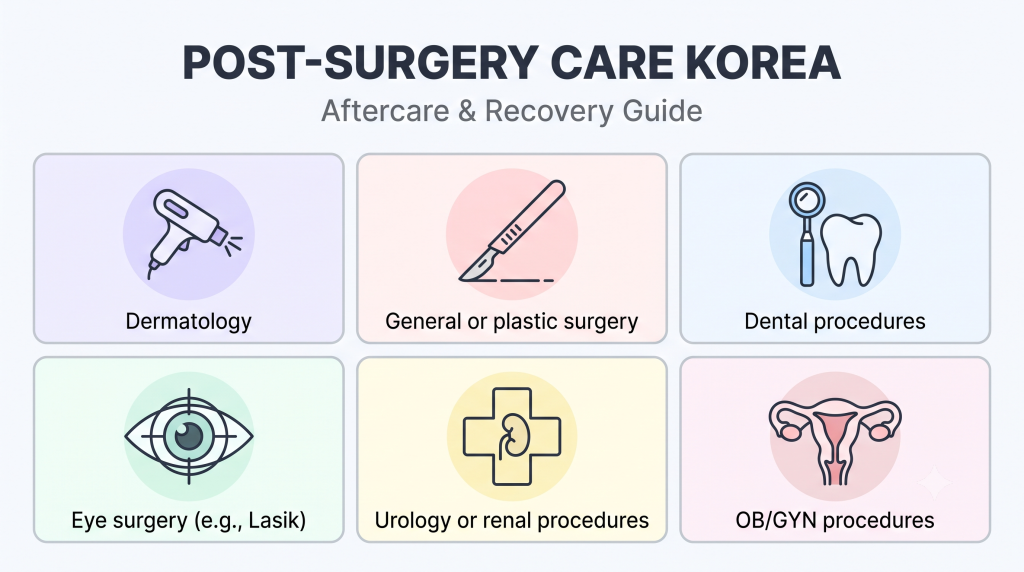
Post-Surgery Care Korea: Aftercare & Recovery Guide for All Medical Procedures (2026)
Provided by MTK (Medical Travel Korea) | Updated: August 2026
These official aftercare guides cover post-procedure recovery for international patients who have undergone medical treatments at MTK partner clinics in Korea. Whether you need aftercare instructions after cosmetic surgery in Korea, post-operative care after dental implants, recovery guidance after LASIK eye surgery, or wound care protocols after plastic surgery in Seoul, this page connects you to the correct specialty guide. Each guide includes detailed recovery timelines, medication instructions, activity restrictions, warning signs, and emergency contact protocols — written specifically for medical tourists recovering in Korea or returning home after treatment. This post surgery care Korea resource covers aftercare after surgery across all specialties, supporting medical tourism recovery planning.
How to Use This Page
Step 1: Find the specialty that matches your procedure from the cards below.
Step 2: Click "View Aftercare Guide" to open the full guide for that specialty.
Step 3: Inside the guide, tap your specific procedure to see detailed recovery instructions.
Not sure which guide to open? Here are common examples:
- Had Botox, filler, laser, Ultherapy, thread lifting, or skin boosters? → Dermatology
- Had rhinoplasty, breast surgery, double eyelid, V-line, or hair transplant? → Plastic Surgery
- Had dental implants, veneers, whitening, or jaw surgery? → Dental
- Had LASIK, LASEK, SMILE, ICL, or cataract surgery? → Ophthalmology
- Had circumcision, prostate treatment, or penile enhancement? → Urology
- Had IVF, hysteroscopy, labiaplasty, or other gynecological procedures? → OB/GYN
Important: These guides are general references. Always follow the specific instructions given by your treating doctor — if your doctor's advice differs from this guide, your doctor's advice takes priority.
Select Your Specialty
Dermatology & Aesthetic Medicine
LivePost-treatment care for skin treatments, injectables, laser procedures, lifting devices, and regenerative therapies performed at dermatology and aesthetic clinics.
View Aftercare Guide →- Bruise Cream
- Soothing Ointment
- DuoDerm Tape
- Skin Boosters / Rejuran
- Fat Dissolving
- Filler
- Botox (Jaw / Wrinkle / Body)
- Hyaluronidase
- Laser / Skincare
- CO2 Laser
- New Aladdin Peeling
- Under-Eye Fat
- PicoFraxel
- Laser Hair Removal
- HIFU / Ultherapy
- Thread Lifting
- RF / Thermage / InMode
- Body Contouring
- Stem Cell
- Acne Scar Treatment
- Tattoo Removal
- Hyperhidrosis / miraDry
- SMP (Scalp Micropigmentation)
- Microneedling / Dermapen
- PRP / Vampire Facial
- Exosome Therapy
- Profhilo / PDRN
- LED / PDT Therapy
- Cryotherapy
Plastic Surgery
LivePost-operative care for surgical procedures including rhinoplasty, breast surgery, facelift, liposuction, fat transfer, and chin contouring performed by board-certified plastic surgeons.
View Aftercare Guide →- General Post-Op
- Rhinoplasty
- Breast Surgery
- Facelift & Neck Lift
- Chin Liposuction
- Liposuction & Fat Transfer
- Double Eyelid / Epicanthoplasty
- Facial Bone Contouring (V-Line)
- Facial Fat Grafting
- Buccal Fat Removal
- Gynecomastia
- Lip Surgery
- Otoplasty
- Hair Transplant (FUE/FUT)
- Complications Guide
Dental
LivePost-treatment care for dental procedures including implants, veneers, teeth whitening, gum surgery, orthodontics, jaw surgery, and tooth extraction performed at dental clinics and hospitals.
View Aftercare Guide →- Dental Implants
- Veneers / Laminates
- Teeth Whitening
- Gum Surgery
- Tooth Extraction
- Jaw Surgery
- Orthodontics / Invisalign
- Root Canal
- Dental Crown
- Complications Guide
Ophthalmology (Eye Surgery)
LivePost-operative care for vision correction and eye procedures including LASIK, LASEK, SMILE, ICL implantation, cataract surgery, and eyelid surgery performed at ophthalmology clinics.
View Aftercare Guide →- LASIK
- LASEK / PRK
- SMILE
- ICL Implantation
- Cataract Surgery
- Eyelid Surgery
- Complications Guide
Urology
LivePost-treatment care for urological procedures and treatments performed at urology clinics and hospitals in Korea.
View Aftercare Guide →- General Post-Op
- Prostate Procedures
- Kidney Stone Treatment
- Circumcision
- Vasectomy
- Penile Girth Enhancement
- Penile Lengthening
- Glans Enhancement
- Complications Guide
Obstetrics & Gynecology
LivePost-treatment care for obstetric and gynecological procedures and treatments performed at OB/GYN clinics and hospitals in Korea.
View Aftercare Guide →- General Post-Op
- Hysteroscopy
- Laparoscopic Surgery
- Hysterectomy
- Fertility / IVF / IUI
- D&C
- Pelvic Floor Therapy
- Labiaplasty
- Vaginoplasty
- Vaginal Rejuvenation
- Complications Guide
Universal Post-Procedure Guidelines
Regardless of your specific procedure, these principles apply to nearly all post-treatment recovery:
- Follow your doctor's instructions first. These guides are general references — your treating physician's specific directions always take priority.
- Avoid alcohol and smoking for at least 1-to-2 weeks after most procedures. Both delay wound healing and increase the risk of complications.
- Protect treated areas from UV exposure. Apply broad-spectrum sunscreen diligently and avoid prolonged direct sunlight. Post-treatment skin is particularly vulnerable to hyperpigmentation.
- Avoid saunas, steam rooms, and intense exercise for the recommended recovery period — typically 1-to-2 weeks depending on the procedure.
- Do not pick, scratch, or forcefully remove any scabs, peeling skin, or crusting that forms at treatment sites. Allow natural healing.
- Stay hydrated and maintain adequate nutrition to support your body's recovery processes.
- Keep all prescribed medication schedules. Complete the full course of antibiotics if prescribed.
- Contact your clinic immediately if you experience unexpected or worsening symptoms. Your MTK coordinator can assist with communication in any language.
Frequently Asked Questions
What aftercare support do medical tourists receive in Korea?
International patients at MTK partner clinics receive comprehensive aftercare support including written recovery instructions in English, prescribed medications, dedicated interpreter assistance for follow-up consultations, and 24/7 access to their MTK coordinator for emergency communication with the clinic. Most clinics also provide direct phone or messaging contact for post-treatment questions during the recovery period.
When can I fly home after surgery in Korea?
Flying timelines vary significantly by procedure. Non-surgical treatments such as Botox, filler, and laser procedures typically allow same-day or next-day flights. Minor surgical procedures like LASIK or dental implant placement may require 2-to-3 days before flying. Major surgeries such as rhinoplasty, breast augmentation, or jaw surgery typically require 7-to-14 days of in-country recovery before air travel is safe. Always confirm your specific travel timeline with your surgeon before booking your return flight.
How do I contact my Korean clinic after I return home?
MTK coordinates all post-treatment communication between you and your clinic — including sharing photos, test results, or X-rays for remote assessment, scheduling video consultations with your treating doctor, and translating clinical advice into your language. Contact your MTK coordinator at any time through the same channel you used during booking.
Can I take my prescribed Korean medications through airport security?
Yes — keep all prescription medications in their original packaging with the pharmacy label visible, and carry a copy of your prescription or a letter from your doctor. For controlled substances, check your destination country's customs regulations before traveling. Your MTK coordinator can provide an English-language medication list and doctor's letter if needed for customs clearance.
Medical Disclaimer: These aftercare guides are for informational purposes only and do not replace the specific post-treatment instructions provided by your treating physician. Individual recovery experiences vary. Always follow the instructions given by your doctor — if there is any conflict between these guides and your doctor's advice, your doctor's advice takes priority. If you experience any unexpected or severe symptoms, contact your treating clinic immediately.