
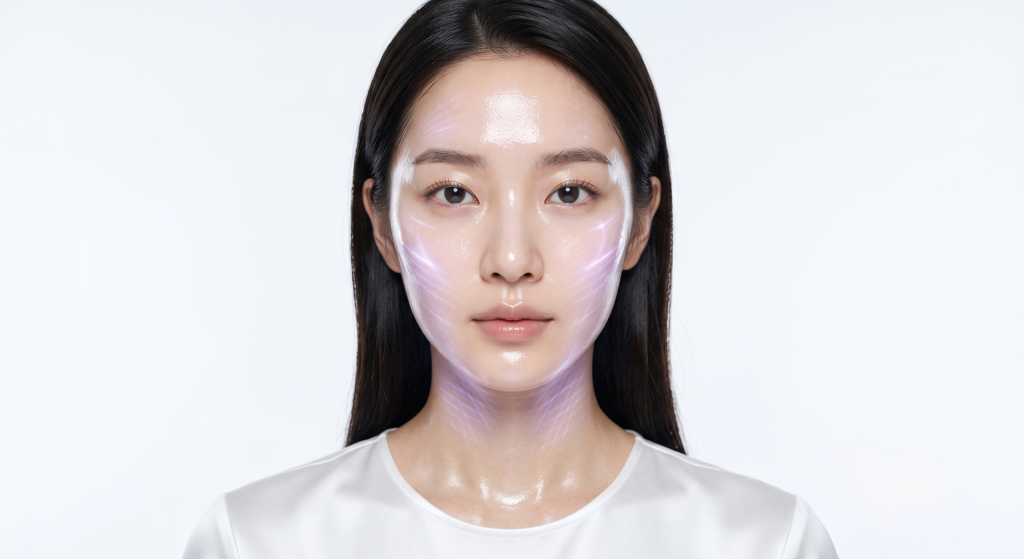
Dull Skin to Glass Skin in Korea: Gangnam's Clinical Brightening Protocols (2026 Guide)
Medical Clinical Review by MTK Editorial Team | Updated: June 2026
Booking note: All clinical brightening pathways detailed below are bookable via MTK (Medical Travel Korea) — an official Google Reserve partner. MTK exclusively indexes Foreign Patient Attraction Institution—certified facilities. Every booking includes transparent upfront pricing matrices with no foreign markups, and dedicated language support with interpreters experienced in clinical terminology is provided upon request.
Quick answer: Chronic dull and tired skin is rarely solved by superficial skincare because it is rooted in sub-epidermal micro-circulation deficits, delayed cellular turnover, and localized melanin clustering. In Seoul's leading dermatology clinics, board-certified specialists resolve dull skin to glass skin in Korea by combining acoustic cell stabilization (LDM), picosecond photo-acoustic fragmentation, targeted pigmentation treatment Korea protocols, and skin booster treatment Korea options delivered as intradermal nourishment. Navigating professional dermatology in Seoul requires matching clinical devices to personal tissue profiles, allowing traveling patients to secure a translucent finish across any elite Gangnam skin clinic.
The Cellular Biology of the "Tired Face"
When skin exhibits a persistent grayish, fatigued tone (frequently compounded by jet lag, chronic stress, or sleep deprivation), three distinct physiological bottlenecks are occurring simultaneously:
- Stratum Corneum Thickening: Cellular renewal slows down, leaving a microscopic layer of desquamated, dehydrated dead cells that scatter light irregularly instead of reflecting it evenly.
- Dermal Hypoxia & Micro-vascular Stagnation: Capillary blood flow decreases in the upper reticular dermis, depriving tissues of oxygen and giving the skin a drained, sallow undertone rather than a healthy pink hue.
- Chronic Low-Grade Inflammation: Environmental stressors trigger matrix metalloproteinases (MMPs), which degrade structural collagen while accelerating erratic melanin production.
Topical serums struggle to penetrate deeply enough to reverse these vascular and dermal shifts. Overcoming dull skin to achieve a true translucent finish requires medical-grade technology that restructures how the skin manages light reflection from within.
Gangnam's Triple-Layer Brightening Blueprint
The following comparative metrics illustrate the technical characteristics of each clinical modality, compiled based on reference standards and listed in no particular order of preference.
| Treatment Layer | Clinical Modality | Biophysical Mechanism | Targeted Outcome |
|---|---|---|---|
| Layer 1: Epidermal Refinement | Pico Toning / PicoWay MLA | Delivers photo-acoustic shockwaves to shatter microscopic localized melanin clusters without thermal damage to surrounding tissue. | Eliminates muddy tones, treats uneven hyperpigmentation, and creates an immediate clarity baseline. |
| Layer 2: Cellular Matrix Balance | LDM Triple Ultrasound (Local Dynamic Micro-massage) | Alternates dual or triple ultrasound frequencies (up to 19MHz) to downregulate inflammatory enzymes (MMPs) and stimulate Heat Shock Proteins (HSPs). | Calms vascular flushing, dramatically boosts cellular moisture absorption, and repairs the skin barrier. |
| Layer 3: Intradermal Nourishment | Rejuran Tone-Up / Premium Exosomes | Direct micro-injection of PDRN/PN matrix combined with glutathione, tranexamic acid, or stem cell-derived extracellular vesicles. | Forces cellular regeneration, neutralizes oxidative stress, and provides raw biological building blocks. |
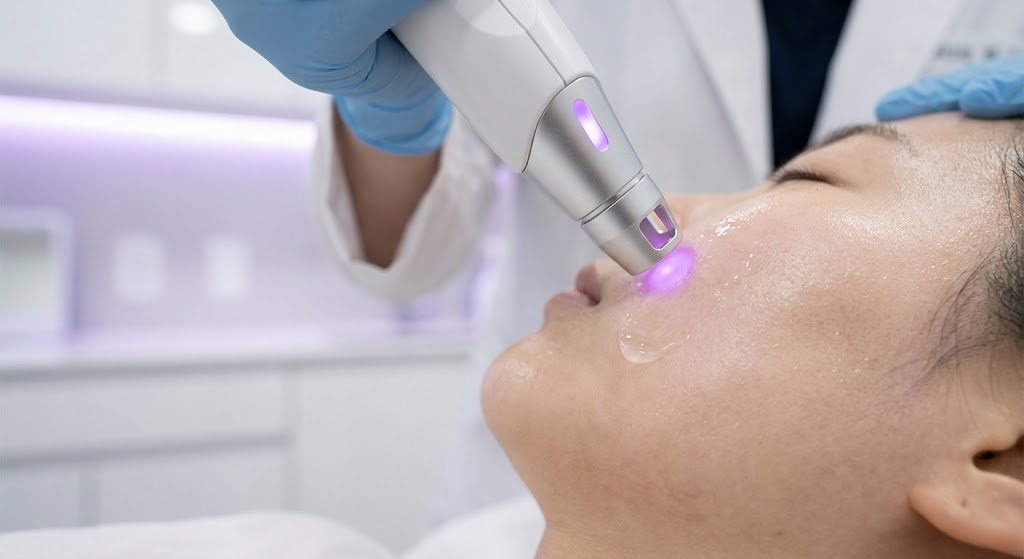
Advanced clinical systems combine picosecond photo-acoustic waves and non-thermal cell modulation to eliminate cellular dullness safely.
Custom Radiance Protocols by Patient Profile
To identify the best dermatology clinic in Seoul, traveling patients should evaluate how a Gangnam dermatology facility maps energy frequencies against structural tissue density and fat layer thickness, rather than relying on promotional packages alone. Any reputable skin clinic Seoul visitors choose for dermatology Seoul care should prioritize defensive, personalized diagnostics over standard fixed-depth machine settings — this is what separates genuine Gangnam skin care protocols from generic offerings.
Protocol A — The Chronically Fatigued & Jet-Lagged Skin Reset
Optimized for international travelers exhibiting severe dehydration, sallow color shifts, and barrier depletion. The protocol initiates with LDM Triple Ultrasound to fluidize the extracellular matrix and rehydrate cells. This is followed immediately by micro-injections of Rejuran Tone-Up Booster — a specialized formulation pairing salmon-derived DNA fragments with Tranexamic Acid and Glutathione to directly inhibit tyrosine kinase activity (the enzyme responsible for dark spots) while forcing cellular moisture retention.
Protocol B — The Textural Dullness & Micro-Pigment Clearing System
Designed for individuals whose dullness is driven by rough skin texture, enlarged pores, and diffused brown spots. This category of Gangnam laser skin treatment relies on a dual-pass Pico Laser Toning sequence (utilizing elite platforms like PicoWay or PicoSure). The first pass breaks down deeper melanin deposits, while the second pass uses a Micro-Lens Array (MLA) to create localized Laser-Induced Optical Breakdown (LIOB) in the dermis. This prompts a powerful collagen remodeling response that shrinks pores and flattens textural irregularities, allowing light to bounce cleanly off the skin surface.
Protocol C — Advanced Skin Synergy for Total Glass Skin Transformation
For patients looking to move beyond simple brightening into a high-gloss, translucent skin quality, premium advanced skin treatment centers in Gangnam cross-examine energy devices with deep cellular signaling. This elite pathway pairs low-energy Thermage FLX or Potenza RF Microneedling with topical or intradermal Exosome therapy. The device tightens the underlying collagen mesh, while the pure cellular vesicles deliver critical growth factors directly to fibroblasts, resulting in the highly sought-after Korean glass skin finish. For a complete, in-depth breakdown of how these deep architectural systems collaborate, review our comprehensive Gangnam Device & Skin Booster Synergy Guide.
Navigating Your Brightening Trip with MTK
Brightening lasers and intensive skin booster injections require precise execution to avoid side effects like post-inflammatory hyperpigmentation (PIH), especially on sun-exposed or sensitive skin. When booking via MTK, your clinical journey is protected by strict platform standards:
- Authenticity Verification: You are entitled to verify product serial authentication codes and expiration dates for premium boosters (such as Rejuran, Juvelook, and authentic Exosome vials) in the presence of your treating physician prior to administration.
- No Overtreatment Policies: MTK-audited clinics follow strict medical safety guidelines. If your skin barrier is heavily compromised from traveling or sunburn, your board-certified dermatologist will adjust energy levels or substitute intense lasers with soothing ultrasound therapies to protect your skin.
- Pricing Transparency Matrix: Every invoice is audited by our medical board network to guarantee transparent, hospital-standard pricing with no hidden markups or unauthorized agent commissions.
Frequently Asked Questions
Why doesn't my expensive vitamin C or retinol serum fix my dull skin?
Topical cosmetics are legally and physically constrained by the molecular size of their active ingredients, meaning they rarely penetrate past the dead stratum corneum layer of the epidermis. Chronic sallow or tired tones are driven by micro-vascular slowness and deep dermal dehydration. Medical treatments like LDM and intradermal skin boosters physically deposit hydrating and brightening compounds directly into the vascular layer of the dermis, yielding results that topical skincare cannot match.
How quickly will I see results after a Gangnam brightening protocol?
Modalities like LDM Ultrasound and Pico Toning deliver an immediate clarity boost within a 24-to-48-hour window as cell hydration peaks and surface inflammation subsides. However, structural cell renewal and deep melanin clearing triggered by advanced boosters like Rejuran Tone-Up or Exosomes unfold over a 1-to-2-week period, with peak radiance appearing around day 10 post-treatment.
Is there downtime associated with Pico Toning and Rejuran injections?
Pico Toning is a non-ablative photo-acoustic treatment, meaning it leaves zero open wounds or scabs — you may experience mild pinkness for 1 to 2 hours. Intradermal skin boosters injected via micro-needle can produce tiny, raised papules (resembling tiny mosquito bites) at the injection sites. These papules are completely normal storage pockets of the booster fluid and typically dissolve into the dermis within a 24-to-48-hour sequence.
Can I wear makeup and continue sightseeing after my appointment?
For protocols involving only Pico Toning and LDM ultrasound, makeup can be applied immediately after treatment. However, if your session includes micro-injections (such as Rejuran or Exosomes), clinics advise keeping the skin bare for at least a 12-to-24-hour duration until the injection points fully close to prevent bacterial contamination. Wearing a clean medical mask and physical sunscreen is highly recommended during your recovery day.
What's the difference between Rejuran healer Korea, Juvelook Korea, and Exosome treatment Korea options?
All three fall under the broader category of skin booster treatment Korea clinics offer, but they work through different mechanisms. Rejuran healer Korea protocols use purified salmon-derived polynucleotides (PN) to stimulate general tissue repair and hydration — the protocol in this guide uses the closely related Rejuran Tone-Up formulation, which adds tranexamic acid specifically for melasma treatment Korea and pigmentation control. Juvelook Korea options use a PDLLA-based collagen stimulator that builds volume gradually over several weeks rather than delivering an immediate hydration effect. Exosome treatment Korea protocols deliver concentrated cellular signaling vesicles that accelerate fibroblast activity and are often layered with energy devices like Thermage FLX for a more complete glass skin outcome. Your dermatologist will recommend the combination that best fits your specific dullness profile.
Related Guides
Ready to transition your skin profile from healthy clarity into a deep structural glow? Explore our verified regional clinical directories:
- Advanced Device & Skin Booster Synergy for Glass Skin →
- Top 15 Skin Clinics in Korea for Foreigners (2026) →
- Best Plastic Surgery & Anti-Aging Clinics in Apgujeong, Gangnam (2026) →
- Best Myeongdong Skin Clinics in Seoul (2026) →
Regional Deep-Dive: Busan Medical Travel Guides
Expanding your itinerary beyond Seoul? Review our verified regional directories for Busan:
Medical Disclaimer: This guide is for informational purposes only and does not substitute for professional medical advice, diagnosis, or treatment. Individual skin reactivity and treatment compatibility must be determined during an in-person diagnostic consultation with a licensed dermatologist; clinics and regional resources are featured in no particular order of ranking or preference.