
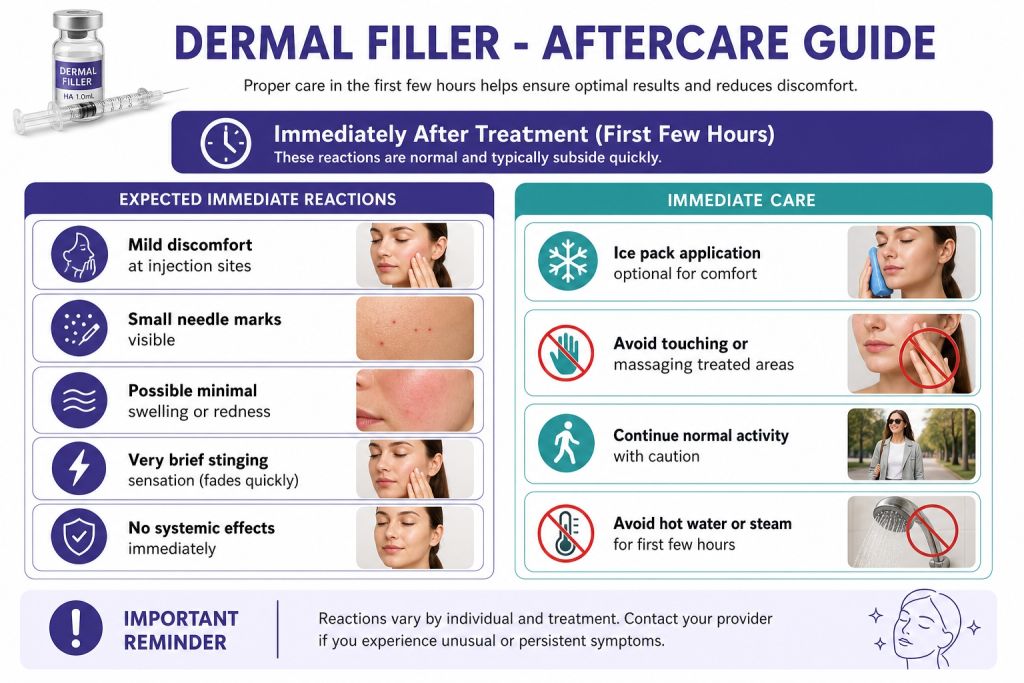
After care
First Week: Initial Adjustment
Physical Changes to Expect
- Bruising and swelling at injection sites
- Bruising typically peaks at 24-48 hours
- Swelling may last 3-7 days
- Varies significantly by individual
- Severity depends on injection depth and area
Managing Bruising and Swelling
Bruising Management:
- Apply ice packs for first 24-48 hours (15 minutes at a time)
- Elevate head while sleeping
- Avoid NSAIDs if possible (can worsen bruising)
- Arnica supplements may help reduce bruising
- Use bruise cream as directed by clinic
- Avoid touching or massaging bruised areas
- Bruises typically fade within 1-2 weeks
- Contact clinic if bruising is severe or spreading
Swelling Management:
- Elevate head while resting or sleeping
- Apply cool compresses (not ice directly)
- Avoid heat exposure (saunas, hot showers)
- Avoid excessive salt intake
- Increase water intake for hydration
- Anti-inflammatory medication if approved by doctor
- Swelling usually peaks at 24-48 hours then improves
Activity Restrictions (First Week)
- Avoid strenuous exercise for 3-7 days
- Avoid hot environments (saunas, steam rooms)
- Avoid alcohol consumption for 24-48 hours
- Avoid smoking for at least 48 hours
- Avoid sleeping on treated areas
- Minimize facial expressions in treated areas
- No facial massage or treatments
Skincare During First Week
- Gentle cleansing only; avoid rubbing
- Avoid makeup on injection sites for 24 hours
- Avoid active ingredients (retinol, AHA, BHA) for 1 week
- Use only fragrance-free, gentle products
- Avoid sun exposure; use SPF 30+ if going outside
- Keep treated areas clean and dry
Other Possible Effects
- Mild headache
- Tenderness at injection sites
- Numbness or tingling (temporary)
- Slight asymmetry initially
- Irregular appearance while settling
- All usually temporary (resolving within days to week)
Sleep and Rest
- Ensure adequate sleep (supports healing)
- Rest during first few days
- Sleep with head elevated on extra pillow
- Avoid pressure on treated areas
Injection Site Care
- Small marks usually resolve within days
- No specific care needed beyond gentle cleansing
- Avoid touching or manipulating
- Keep clean and dry
- Report signs of infection to clinic
Weeks 2-4: Settling Phase
Expected Changes
- Bruising and swelling improving significantly
- Swelling usually resolved by week 2-3
- Bruises fading by end of week 2-3
- Filler beginning to integrate with tissue
- Appearance becoming more natural
- Overall improvement noticeable
Filler Integration
- Filler settling into proper position
- Takes approximately 2 weeks to fully set
- Avoid pressure on treated areas during this time
- Filler gradually integrates with surrounding tissue
- Final contours becoming more apparent
- Movement and feel becoming more natural
Visible Results
- Lines and wrinkles appearing less prominent
- Volume restoration becoming visible
- Facial balance improving
- Results appearing more natural than immediately post-treatment
- Initial results impressive by end of week 2
Lifestyle Modifications
- Return to normal exercise by week 2 (if swelling resolved)
- Light exercise acceptable after swelling subsides
- Strenuous exercise still best avoided during week 2-3
- Alcohol consumption resumable
- Smoking best continued to be avoided
- Normal social and professional activities resumable
Skincare Status
- More aggressive skincare gradually resumable
- Begin active ingredients cautiously after week 1
- Sun protection continues (important for skin health)
- Gentle facial massage acceptable after swelling resolves
- Hydrating masks beneficial for skin
Potential Adjustments
- Some asymmetry may appear as filler settles
- Contact clinic if significant asymmetry develops
- Minor touch-ups sometimes needed at 2-week mark
- Discuss concerns with treating physician
Follow-up Appointments
- Attend scheduled follow-up if recommended
- Allow physician to assess final results
- Discuss any concerns about placement or effect
- Plan for future maintenance if desired
Months 2-3: Optimal Results
Observable Results
- Final filler placement fully evident
- Natural-looking results achieved
- Bruising completely resolved
- Swelling completely gone
- Facial balance and contours improved
- Patient satisfaction typically high
Longevity Timeline
- Hyaluronic acid fillers: 6-12 months typically
- Results begin subtle decline after 6 months
- Progressive filler resorption occurs
- Results maintained throughout month 2-3
- Optimal appearance during this period
Lifestyle
- Normal activities completely resumed
- No exercise restrictions
- Social and professional activities unrestricted
- No dietary restrictions
- Results stable and maintained
Skincare
- Normal skincare routine continued
- Sun protection very important (prevents aging)
- Regular moisturizing beneficial
- Gentle exfoliation acceptable
- Professional facials resumable
Side Effects Resolution
- All side effects completely resolved
- No lingering effects expected
- Filler well-tolerated
- Comfort and confidence restored
- Results stable and satisfying
Months 3-6: Maintenance and Planning
Long-term Results
- Results remain excellent through month 3
- Gradual filler resorption beginning
- Very subtle changes may appear by month 4-5
- Results still very satisfactory
- Patient adjustment to new appearance complete
Planning for Future
- Discuss maintenance schedule with provider
- Plan timing for touch-up or repeat treatment
- Consider maintenance injections every 6-9 months
- Gradual approach to additional treatments optional
- Build relationship with treating physician for continuity
Optimal Maintenance Strategy
- Subtle, regular touch-ups maintain results better than large injections
- Prevention of overcorrection through maintenance approach
- Building natural appearance through consistent, measured treatments
- Patient satisfaction typically highest with maintenance approach
Important Information About Dermal Fillers
Safety Considerations
- Fillers are medical devices (some FDA-approved)
- Require trained, qualified healthcare provider
- Medical assessment necessary before treatment
- Complete medical history important
- Contraindications and drug interactions must be reviewed
- Not safe for everyone
Serious Complications (Rare)
- Most serious complications extremely rare
- Vascular occlusion (blockage of blood vessel)
- Tissue necrosis (tissue death)
- Severe allergic reaction (anaphylaxis)
- Infection at injection site
- Any severe symptoms warrant immediate medical attention
- Contact provider immediately if concerning symptoms develop
Product Selection
- Multiple filler types available (hyaluronic acid, calcium hydroxylapatite, others)
- Different longevity and characteristics
- Discuss options with qualified provider
- Choose FDA-approved or well-established products
- Avoid unregulated or counterfeit products
Filler Restrictions
- Cannot use if history of severe allergic reactions to filler components
- Cannot use if active skin infections or severe acne in treatment area
- Caution with blood thinners (risk of increased bruising)
- Pregnancy and breastfeeding typically contraindicate treatment
- Complete medical history needed
Dietary and Lifestyle Recommendations
General Health During Recovery
- Maintain healthy diet supporting skin health
- Stay well-hydrated (supports skin health)
- Adequate sleep important (supports healing)
- Manage stress (stress can accelerate aging)
- Regular exercise beneficial (promotes circulation)
Sun Protection
- Daily SPF 30+ sunscreen essential
- Sun protection prevents premature aging
- UV exposure can accelerate filler resorption
- Reapply sunscreen every 2 hours if outdoors
- Avoid peak sun hours when possible
Skincare for Longevity
- Moisturize regularly (supports skin health)
- Use gentle, quality skincare products
- Consider retinoids (with medical approval)
- Antioxidant serums beneficial
- Professional skincare treatments supportive
Medical Supervision
- Choose qualified, licensed healthcare provider
- Board-certified preferred (dermatologist or plastic surgeon)
- Experience with filler treatments important
- Clear communication about goals essential
- Follow-up care and support important
When to Contact Your Provider
Contact immediately if experiencing:
- Severe pain, especially if increasing over time
- Signs of infection (increasing redness, warmth, pus)
- Severe swelling that worsens after initial period
- Signs of vascular compromise (skin discoloration, severe pain)
- Severe allergic reaction (rash, difficulty breathing)
- Lumps or nodules in injection area
- Any severe or concerning symptoms
- Vision changes or eye symptoms
Contact for routine follow-up:
- Scheduled follow-up appointment (typically 2 weeks)
- Assessment of results and any asymmetry
- Discussion of touch-up needs
- Questions or concerns about results
- Planning for maintenance or future treatments
- Any minor concerns about appearance or function