
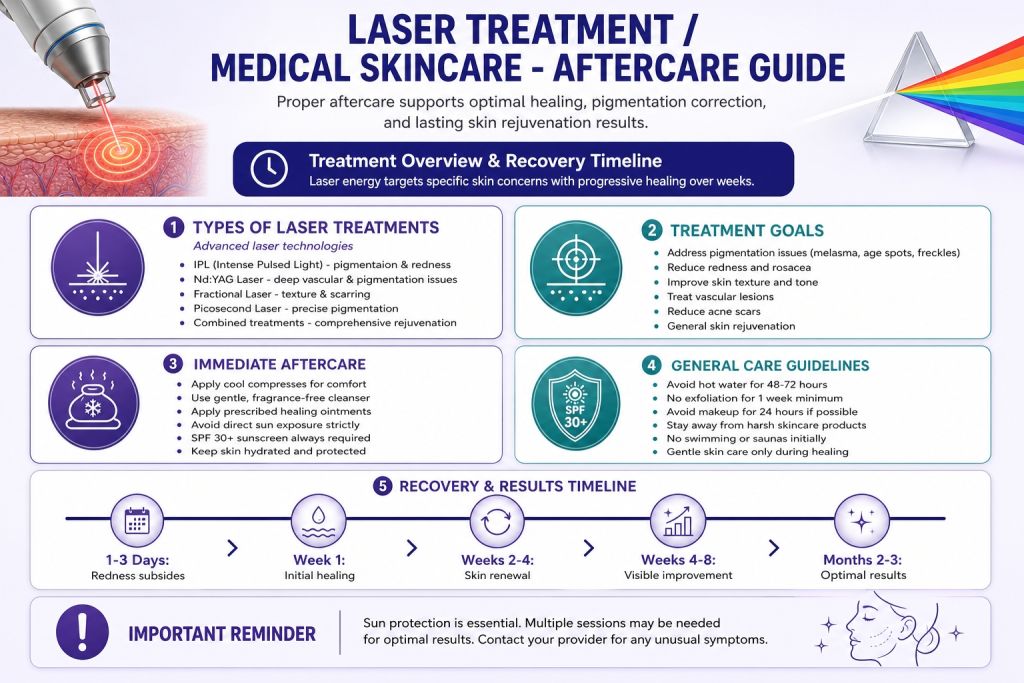
Post-Operative Care by Procedure
Immediately After Treatment (First 2-4 Hours)
Expected Immediate Reactions
- Temporary heat sensation in treated area
- Mild to moderate pain (described as "sunburned" feeling)
- Skin redness (erythema)
- Possible mild swelling
- Slight darkening of pigmented areas
- Skin may feel warm or hot
Immediate Care
Cold Compress Application:
- Use ice pack wrapped in clean cloth
- Apply for 10-15 minutes immediately post-treatment
- Remove and rest for 15-30 minutes
- Repeat 3-4 times during first 2-4 hours
- Provides pain relief and reduces inflammation
Pain Management:
- Use acetaminophen (Tylenol) only if needed
- Avoid NSAIDs (ibuprofen, naproxen) for first 48 hours
- Most discomfort resolves within hours
- Contact clinic if pain is severe or persistent
Skin Protection:
- Do not touch or rub treated area
- Avoid applying any products immediately
- Keep area clean and dry
- Avoid scratching if skin feels itchy
Days 1-3: Initial Recovery
Expected Skin Changes
- Continued redness lasting 1-3 days (varies by treatment intensity)
- Mild swelling (usually minimal)
- Treated pigmented areas may appear darker (temporary)
- Skin may feel slightly tight or uncomfortable
- Slight flaking or dryness may begin
- Possible mild tenderness to touch
Skincare During This Phase
- Use only gentle, fragrance-free cleanser
- Wash with lukewarm water (not hot)
- Pat skin completely dry
- Apply prescribed post-laser cream if provided
- Avoid all makeup if possible; if necessary, use mineral makeup only
- No active ingredients or stimulating products
Products to Absolutely Avoid (First 3 Days)
- Alcohol-containing products (standard toners, astringents)
- Vitamin C serums and serums with active ingredients
- Retinol or retinoid products
- AHA/BHA exfoliants (glycolic acid, salicylic acid)
- Niacinamide-based products
- Essential oils or fragrant skincare
- Any potentially irritating products
Sun Protection (Critical)
- Apply SPF 30+ broad-spectrum sunscreen
- Reapply every 2 hours
- Wear protective clothing (hat, long sleeves, sunglasses)
- Avoid direct sun exposure
- UVA/UVB protection essential to prevent pigmentation issues
- Sun exposure during healing dramatically increases complications
Sleeping Position
- Sleep on back with head elevated
- Use 2-3 pillows to elevate face
- Avoid sleeping on treated side
- Prevents additional facial pressure and swelling
Days 4-7: Active Peeling and Healing
Skin Appearance Changes
- Redness begins fading noticeably
- Visible flaking and peeling may begin
- Treated pigmented areas continue darkening (normal process)
- Skin may appear slightly dull or grayish
- Dryness becomes more pronounced
- Itching may increase as skin heals
Important: Do Not Pick or Peel
- Resist urge to remove peeling skin
- Picking causes scarring and pigmentation issues
- Pulling skin off prematurely damages healing process
- Allow skin to naturally shed
- Picking can cause infection
Moisturizing Protocol
- Apply fragrance-free moisturizer 2-3 times daily
- Use generous amounts to combat dryness
- Apply to damp skin for better absorption
- Use non-comedogenic formulas
- Hydration supports healing and minimizes complications
- Consider heavier moisturizers (creams vs. lotions)
Cleansing
- Continue gentle, fragrance-free cleanser
- Use lukewarm (not hot) water
- Avoid hot showers; take short, cool showers
- Pat dry gently; never rub
- Can resume twice-daily cleansing
- Use clean hands only; avoid washcloths
Makeup
- Light mineral makeup acceptable starting day 5-7
- Avoid heavy foundation which can trap bacteria
- Ensure makeup is non-comedogenic
- Remove thoroughly with gentle cleanser
- Brushes and sponges should be clean
- Some clinicians recommend avoiding makeup completely during peeling
Activity
- Continue avoiding strenuous exercise (sweat irritates healing skin)
- Light walking acceptable
- Avoid saunas, steam rooms, hot yoga
- Avoid swimming and water sports
- No activities causing facial flushing
Week 2-3: Stabilization Phase
Skin Appearance
- Most redness resolved (may have mild residual redness)
- Peeling largely complete
- Skin may still appear slightly dull
- Texture begins improving visibly
- Pigmented areas begin showing lighter appearance
- Overall skin tone evening out
Pigmentation Changes
- Darkening of pigmented spots (temporary) continues fading
- Some spots may become temporarily darker before fading
- This is normal; spots will continue improving
- Do not be alarmed by continued darkening
- Complete lightening takes 2-4 weeks
Skincare Reintroduction
- Can begin introducing gentle actives (Vitamin C, niacinamide)
- Introduce one new product every 3-5 days
- Monitor for any sensitivity
- Still avoid strong actives (retinol, strong acids)
- Can resume normal moisturizing routine
- Continued diligent sun protection
Sun Protection (Absolutely Critical)
- This is when most people fail in aftercare
- Continue SPF 30+ application daily
- Reapply every 2 hours
- Direct sun exposure causes permanent pigmentation damage
- Even brief exposure can cause lasting issues
- Wear protective clothing when possible
- Consider using SPF spray for touch-ups over makeup
Return to Activities
- Light exercise resumable after day 7
- Full exercise routine acceptable after 10-14 days
- Sauna and steam room acceptable after 2 weeks (if healing proceeding well)
- Swimming resumable after 2 weeks (once peeling completely finished)
- Avoid chlorine-heavy pools initially
Weeks 4+: Complete Healing and Results
Expected Results
- Dramatic improvement in skin texture and tone
- Pigmented areas significantly lighter
- Redness fading completely
- Skin appears brighter and more even
- Fine lines appear softer
- Overall skin quality enhanced
Timeline for Results
- Immediate (days 1-7): Some improvement visible
- Short-term (weeks 2-3): Noticeable enhancement
- Intermediate (weeks 4-6): Significant visible improvement
- Long-term (weeks 8-12): Optimal results achieved
- Continued (months 3-6): Progressive improvement
Return to Normal Routine
- Can resume all skincare products
- Resume active ingredients (retinol, acids, Vitamin C)
- Return to normal makeup routine
- Resume all activities
- Continue sun protection (always important for skin health)
Potential Complications and Signs
- Most minor side effects resolve naturally within 2-4 weeks
- Severe or unusual reactions warrant clinic contact
Common Side Effects and Management
Post-Inflammatory Hyperpigmentation (PIH)
- Temporary darkening of treated areas
- More common in darker skin types
- Usually resolves within 2-3 months
- Management:
- Strict sun protection
- Continue avoiding sun exposure
- Use prescribed bleaching cream if provided
- Vitamin C serum may help
- Wait; most resolve naturally
- Do not pursue additional treatments immediately
Post-Inflammatory Hypopigmentation (PIH)
- Temporary lightening of treated areas
- Rare and usually temporary
- May take months to resolve
- Management:
- Continue sun exposure (paradoxically helps)
- Avoid strict sun avoidance (some sun helps color return)
- Be patient; usually resolves naturally
- Contact clinic if concerned
Unexpected Acne Breakout
- Laser can temporarily trigger breakouts
- Occurs in 5-10% of patients
- Usually appears days 3-5 post-treatment
- Management:
- Normal healing response; not infection
- Avoid picking or manipulating
- Use gentle acne products if needed
- Usually resolves within 1-2 weeks
- Avoid triggering more inflammation
Persistent Redness Beyond Expected Timeline
- If redness continues beyond 3-4 weeks
- May indicate sensitive skin or too-aggressive treatment
- Management:
- Contact clinic for evaluation
- May need calming treatments
- Possibly need modified future treatments
- Typically resolves with time and care
When to Contact Your Clinic
Contact immediately if experiencing:
- Severe pain unrelieved by ice or acetaminophen
- Excessive swelling or blistering
- Signs of infection (pus, severe warmth, fever)
- Severe allergic reaction (hives, difficulty breathing)
- Uncontrolled itching or severe burning
- Results worsening instead of improving after 1 week
- Any concerning symptoms or unexpected reactions