
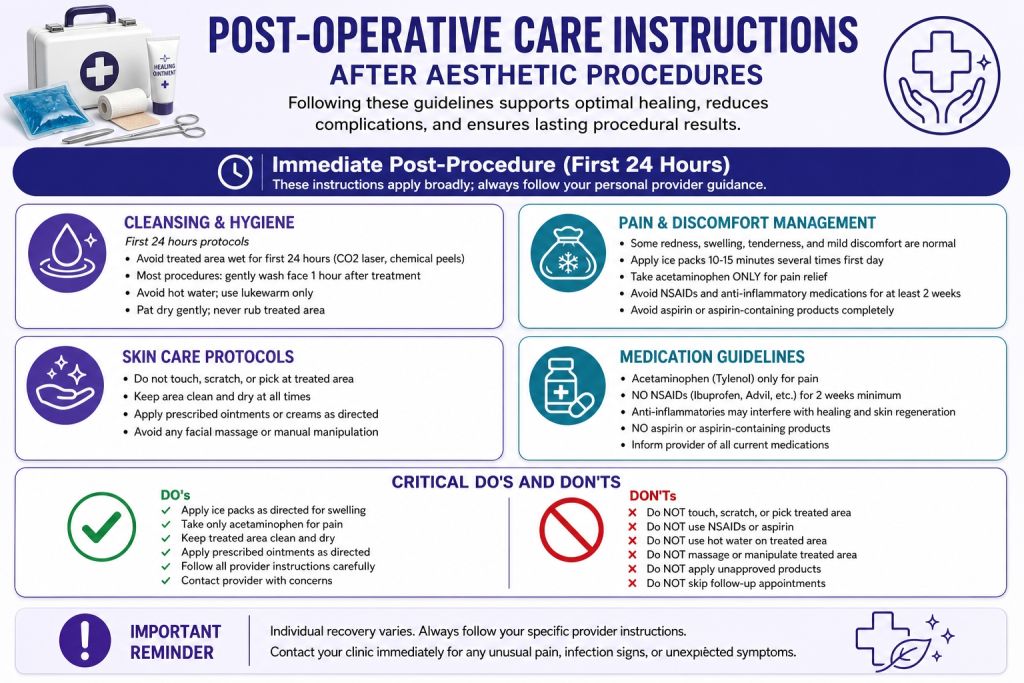
Post-Procedure
First Week Post-Procedure
Activity Restrictions
- Avoid strenuous exercise, intense workouts, and activities that cause excessive sweating for at least 1 week
- Avoid hot environments such as saunas, steam rooms, and hot tubs for 1-2 weeks
- Avoid swimming and water activities that might introduce bacteria or chlorine to the treated area
- Avoid direct sunlight exposure as much as possible
Alcohol and Smoking
- Avoid alcohol consumption for at least 1-2 weeks, as it increases inflammation and delays healing
- Avoid smoking and secondhand smoke for at least 1-2 weeks, as nicotine restricts blood vessels and impairs healing
- Smoking can cause chronic vascular damage and accelerate skin aging
Skincare Products
- Avoid products containing alcohol (such as standard toners) for 3 days after treatment
- Avoid irritating products including bleaching agents, exfoliants, and chemical peels for at least 1 week
- Do not use makeup for at least 24 hours (unless otherwise directed), then apply makeup gently
- Use gentle, fragrance-free moisturizers to keep skin hydrated
- Use a high-SPF sunscreen (SPF 30+) daily, even on cloudy days
Wound Care
- If scabs or crusts form, do not pick or force them off; allow them to fall off naturally
- If regenerative tape (Duoderm) is applied, change it every 1-2 days as directed
- If you experience tape allergies (itching), remove it immediately and apply prescribed antibiotic ointment instead
- Keep any open areas clean and protected
Weeks 2-4 Post-Procedure
Gradual Return to Normal Activities
- Light exercise and normal daily activities may resume after 1-2 weeks, depending on the procedure type
- Avoid intense or contact sports for at least 2-4 weeks
- You may resume sauna and steam room use after the treated area has sufficiently healed (typically 2-4 weeks)
- Swimming and water activities may resume once any scabs or crusts have completely healed
Skincare
- Continue moisturizing regularly to prevent dryness and support skin regeneration
- Apply sunscreen liberally and reapply every 2 hours, especially if outdoors
- Use a SPF spray over makeup for additional protection throughout the day
- Begin gentle skincare routines; avoid harsh scrubbing or manual massage
- Continue avoiding irritating products; introduce them gradually only if skin is no longer sensitive
Medications and Supplements
- Avoid NSAIDs (non-steroidal anti-inflammatory drugs), steroids, medicated patches, and unverified herbal remedies for at least 2 weeks, as these can interfere with skin regeneration
- If pain persists, use only acetaminophen (Tylenol)
- Consult your doctor before taking any new medications or supplements
General Precautions (All Procedures)
Things to Avoid
- Do not squeeze, pick at, or aggressively touch the treated area
- Do not apply heavy makeup or thick creams immediately after procedures
- Avoid facials, microdermabrasion, chemical peels, and other aggressive treatments for at least 2-4 weeks
- Avoid manual lymphatic drainage massage and other intense facial treatments
- Do not sleep face-down on treated areas; use extra pillows to keep your head elevated
Sun Protection
- Sun exposure can cause permanent pigmentation changes and color darkening that may last several months
- Use broad-spectrum SPF 30+ sunscreen daily
- Reapply sunscreen over makeup using a spray formula every 2 hours
- Wear protective clothing, hats, and sunglasses when outdoors
- Avoid direct sun exposure during peak hours (10 AM - 4 PM) if possible
When to Contact Your Doctor
- If you experience excessive pain, swelling, or bruising that worsens after 3-5 days
- If you develop signs of infection (increased redness, warmth, discharge, pus, or fever)
- If you experience severe allergic reactions (hives, difficulty breathing, severe itching)
- If you notice signs of complications such as blistering, burn-like damage, or unusual skin changes
- If any symptoms persist longer than expected or worsen over time
Expected Recovery Timeline
Most Procedures (General)
- Redness and mild swelling: 2-7 days
- Tenderness and sensitivity: 3-7 days
- Bruising: up to 2 weeks or longer (varies by individual)
- Return to light activities: 1 week
- Return to normal activities: 2-4 weeks
- Full healing and results: 2-12 weeks depending on procedure
Frequently Asked Questions
Q: When can I resume wearing makeup? A: Most procedures allow gentle makeup application after 24 hours. For procedures with scabs or crusts, wait until these have completely healed. Avoid heavy foundation or products that rub off easily.
Q: Is some bruising and swelling normal? A: Yes, mild to moderate bruising, swelling, redness, and tenderness are normal after most procedures and typically resolve within 1-2 weeks.
Q: When will I see results? A: Results vary depending on the procedure. Some procedures show immediate results, while others show gradual improvement over 2-12 weeks as the skin regenerates and heals.
Q: Can I use my regular skincare products? A: Avoid harsh or irritating products for at least 1 week. Stick to gentle cleansers and moisturizers. Avoid products with active ingredients like retinol, vitamin C, AHAs, or BHAs until your doctor clears you.
Q: What if I notice unexpected symptoms? A: Contact your clinic immediately if you experience severe pain, excessive swelling, signs of infection, allergic reactions, or any other concerning symptoms.
Important Reminders
- Follow all post-care instructions provided by your specific procedure protocol
- Every person heals differently; individual results and recovery times may vary
- Patience is important—allow adequate time for healing before judging final results
- Maintain a healthy lifestyle with proper sleep, hydration, and nutrition to support healing
- Avoid stress and try to keep your head elevated while sleeping to minimize swelling
- If you have any concerns or questions, contact your clinic immediately