
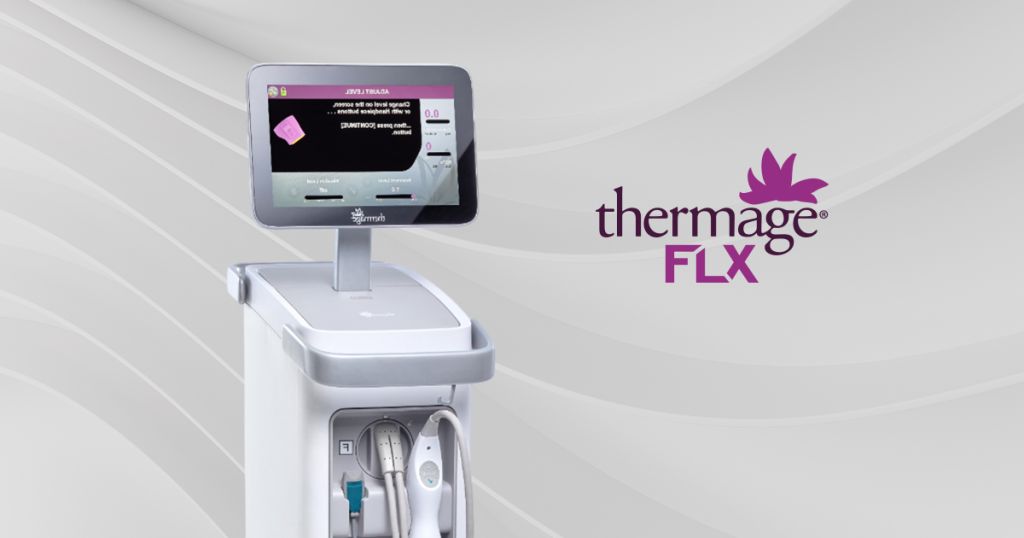
Quick Answer: Thermage is a non-invasive monopolar radiofrequency (RF) treatment used to improve the appearance of facial and periorbital wrinkles and skin firmness. The current generation is Thermage FLX, made by Solta Medical. It delivers controlled RF energy while cooling the skin surface; the system’s AccuREP™ technology automatically calibrates energy delivery, and vibration is built into face and body treatment modes to improve comfort. Thermage FLX is FDA-cleared in the United States—not “FDA-approved”— under the 510(k) pathway. [1], [2], [3]
Korea price guide: current public Korean clinic listings reviewed by MTK suggest approximately ₩800,000–₩2,000,000+ for 300 shots, ₩1,200,000–₩3,600,000+ for 600 shots, and ₩2,200,000–₩5,400,000+ for 900 shots. Eye Thermage commonly appears around ₩900,000–₩2,200,000+ depending on 225 vs 450 shots. The right shot count depends on treatment area and treatment design; more shots are not automatically better.
Thermage FLX in Korea at a Glance
- Device: Thermage FLX by Solta Medical.
- Technology: monopolar RF; FDA documentation lists a 6.78 MHz operating frequency.
- Main Korea face-tip options: 300, 600 and 900 shots (REP).
- Eye options: dedicated 0.25 cm² Eye Tip with 225 or 450 shots (REP).
- Typical plan: one treatment session, with gradual changes developing over the following months.
- Manufacturer timeline: measurable changes may develop over 2–6 months and may last 1–2 years depending on skin condition and aging.
- Korea-specific check: Solta Medical Korea provides an official genuine-tip authentication system.
What Is Thermage?
Thermage is an established non-invasive RF treatment used for skin tightening and wrinkle improvement. Rather than using needles or focused ultrasound, the device delivers monopolar radiofrequency energy through a treatment tip while conductive cooling protects the epidermal surface. The thermal effect causes immediate collagen denaturation and contraction, followed by longer-term collagen remodeling. [2], [4]
The original draft of this guide described Thermage as “FDA-approved.” The more accurate wording is FDA-cleared. The current Thermage FLX system received U.S. FDA 510(k) clearance in 2017 under K170758; earlier Thermage systems have a longer FDA clearance history. [3]
What Is Thermage FLX?
Thermage FLX is the current generation of the Thermage platform. It uses a larger 4.0 cm² Total Tip for face treatments, a dedicated 0.25 cm² Eye Tip for the periorbital area, AccuREP™ automatic calibration, cooling and vibration-assisted comfort features. The manufacturer states that the 4.0 cm² Total Tip provides greater surface coverage and can shorten treatment time compared with the older 3.0 cm² tip. [1], [2]
If a Korean clinic advertises simply “Thermage,” ask whether the treatment is Thermage FLX or an older Thermage generation. Also confirm the exact tip, shot count and treatment area before comparing prices.
How Does Thermage Work?
1. Monopolar RF energy is delivered through the treatment tip
Thermage FLX delivers RF energy into deeper tissue while the skin surface is actively cooled. The goal is controlled bulk heating rather than removing or ablating the skin surface. FDA documentation describes RF energy delivery from a disposable tip while the system monitors contact and tunes energy delivery. [3]
2. Existing collagen contracts
Thermal denaturation can contract existing collagen and fibrous septa. Some patients notice an early tightening effect, but immediate visual change varies and should not be treated as a guaranteed result. [2]
3. Collagen remodeling continues over time
The longer-term effect comes from tissue remodeling after controlled RF heating. The manufacturer states that measurable results typically develop over 2–6 months after a single session. Systematic reviews of aesthetic RF treatments also report improvements in skin laxity, elasticity and wrinkles across multiple RF technologies, although outcomes vary by device and study quality. [1], [5]
What Can Thermage Realistically Improve?
| Concern | Reasonable goal | Important limit |
|---|---|---|
| Skin laxity / firmness | Gradual tightening and improved firmness in selected patients. | Not equivalent to a surgical facelift. |
| Fine lines / wrinkles | Thermage is cleared and marketed for non-invasive wrinkle treatment, including periorbital wrinkles. | Deep folds may need a different or combined approach. |
| Jawline / facial contour | Firming may make the lower-face contour look more defined. | It does not remove large amounts of fat or replace structural surgery. |
| Eye area | Dedicated Eye Tip treatment can target periorbital and eyelid wrinkles. | Eye treatment requires the dedicated protocol and appropriate eye protection. |
| Texture / pores | Some patients report smoother texture as skin remodels. | Pore reduction is not the primary FDA-cleared indication and should not be guaranteed. |
Thermage 300 vs 600 vs 900 Shots: What Is the Difference?
In Korea, Thermage FLX is commonly sold by shot count, also called REP. Solta Medical Korea lists 300-, 600- and 900-shot configurations for the 4.0 cm² Total Tip. A higher shot count mainly allows broader treatment coverage or more treatment passes— it does not automatically mean a better result for every face. [2]
| Shot count | How it is commonly used in Korea | What to ask before booking |
|---|---|---|
| 300 shots | More limited or targeted face coverage; exact mapping varies by clinic. | Which areas are included, and is the clinic treating the full face or selected zones? |
| 600 shots | Commonly advertised as a broader full-face plan. | Is the jawline, forehead, submental area or eye region included? |
| 900 shots | Broader coverage or more extensive treatment mapping in selected patients. | What additional areas or passes justify the higher count? |
Do not choose 900 shots simply because it is the largest number. Facial size, skin thickness, laxity pattern, planned zones, energy settings and the physician’s treatment map all affect how a shot count is used.
What Is Eye Thermage?
Eye Thermage uses the dedicated 0.25 cm² Eye Tip. Solta Medical Korea lists 225- and 450-shot options for treatment around the eyes. The device is cleared for non-invasive treatment of periorbital wrinkles, including the upper and lower eyelids. [2], [3]
Eye Thermage should not be treated as simply “extra face shots.” The eye area uses its own tip and protocol. Ask whether appropriate ocular protection is used and whether the quoted price refers to 225 or 450 shots.
How Much Does Thermage FLX Cost in Korea?
Thermage FLX is a premium RF treatment in Korea, and pricing varies substantially by shot count, treatment area, tip type, physician, clinic, promotion and VAT . The older draft’s flat “₩800,000–₩1,500,000 full-face” range is now too narrow for the 2026 Seoul market.
| Thermage FLX option | Approximate Korea reference range | What to compare |
|---|---|---|
| 300 shots | ₩800,000–₩2,000,000+ | Total Tip, treatment area, VAT, physician involvement and whether it is a first-visit promotion. |
| 600 shots | ₩1,200,000–₩3,600,000+ | Full-face coverage, VAT, genuine tip and whether add-ons are bundled. |
| 900 shots | ₩2,200,000–₩5,400,000+ | Face / neck coverage, treatment map, VAT and provider tier. |
| Eye Thermage 225 / 450 shots | ₩900,000–₩2,200,000+ | 225 vs 450 shots, dedicated Eye Tip, eye protection and VAT. |
Source: MTK reference price ranges, compiled and estimated from publicly available Korean clinic pricing reviewed in October 2026. The sample is mainly from Seoul and the greater Seoul area. These are budgeting references, not transaction averages or regulated nationwide prices; “+” means higher quotes are possible.
Prices are for reference only. The final treatment plan and price are subject to the quote provided by the clinic after consultation. Before comparing offers, confirm: FLX device, genuine tip, shot count, treatment area, VAT, physician involvement and any bundled procedures.
How Do I Check a Genuine Thermage Tip in Korea?
This is one of the most useful Korea-specific checks. Solta Medical Korea states that Thermage uses one exclusive tip for one patient and operates an official product-authentication system. The Korean Thermage site allows patients to verify the tip using the authenticity code provided with treatment. [2]
If a price looks unusually low, ask the clinic to confirm: Thermage FLX, the genuine sealed tip, the exact shot count and whether the authenticity code can be verified. Do not assume that every Korean-made monopolar RF treatment advertised as “Korean Thermage” is actually Thermage FLX.
Thermage vs Ultherapy, Shurink, Oligio, XERF and Other Lifting Treatments
The biggest beginner mistake is comparing all “lifting” devices as if they do the same thing. Thermage FLX belongs to the monopolar RF category. Ultherapy and Shurink use focused ultrasound, while Oligio, XERF and Density are separate RF platforms with their own hardware, tips and treatment protocols.
| Treatment | Main technology | Useful comparison question |
|---|---|---|
| Thermage FLX | Monopolar RF | Which tip, how many shots, which areas and what energy plan? |
| Ultherapy / Ultherapy Prime | Microfocused ultrasound with imaging | Is your main goal deeper focal lifting, dermal tightening or a combination? |
| Shurink Universe | Focused ultrasound / HIFU | How does the planned depth and shot map differ from Thermage? |
| Oligio / Oligio X | Separate Korean monopolar RF platform | Do not compare by shot count alone; confirm device, tip and protocol. |
| XERF / Density | Separate RF platforms | Compare device design, frequencies / modes, treatment map, comfort and cost. |
| InMode | A brand family with multiple RF-based handpieces | Ask which InMode handpiece is actually being proposed before comparing it with Thermage. |
There is no universal rule that Thermage is “better” than ultrasound lifting or newer Korean RF systems. They deliver energy differently and can be chosen for different anatomy, goals, comfort preferences and budgets. For a detailed HIFU comparison, see Shurink Complete Beginner’s Guide .
Who May Consider Thermage?
Thermage is commonly discussed for people with mild to moderate skin laxity, fine wrinkles, early loss of firmness or periorbital wrinkles who want a non-surgical treatment with little recovery time. Published clinical literature on monopolar RF supports measurable improvement in selected patients with facial laxity and wrinkles. [4], [5], [6]
Age alone should not determine candidacy. The original article suggested preventive treatment specifically for people in their 30s and different durations by age; those fixed age rules are not necessary. Skin thickness, laxity, facial volume, treatment history and goals matter more than a birthday.
What Happens During a Thermage FLX Session?
- Consultation and treatment mapping: the clinician assesses laxity, facial structure and treatment zones.
- Preparation: the skin is cleaned; photos may be taken; a treatment grid and coupling fluid may be used depending on protocol.
- Tip and shot confirmation: in Korea, confirm the genuine tip and the agreed 300 / 600 / 900 or eye-shot configuration.
- RF delivery: the handpiece delivers individual RF pulses while cooling protects the skin surface.
- AccuREP calibration: the FLX system automatically calibrates energy delivery during treatment.
- Comfort feedback: vibration and cooling can aid comfort, while energy is adjusted according to the treatment plan and patient feedback.
Treatment time varies by area and shot count. Do not assume that a faster appointment or a higher shot count automatically means a better treatment.
Does Thermage FLX Hurt?
Thermage is not automatically painless. Patients usually feel repeated heating followed by cooling. The FLX system incorporates vibration and cooling to aid comfort, but sensation varies by area, energy level and individual pain tolerance. [1]
Clinical evidence also shows that discomfort can be meaningful for some patients. A 64-patient study of a monopolar RF system with vibration reported an average pain score of 6.06/10, while most participants still tolerated the treatment. That study involved an earlier generation and should not be treated as an FLX-specific pain score, but it is a useful reminder that “no pain” should not be promised. [4]
Korean clinics differ in pain-management approach. Some use topical numbing, oral medication or sedation; others perform Thermage without numbing. Ask what is included in your specific plan rather than assuming one standard protocol.
How Many Thermage Sessions Do I Need?
Thermage FLX is commonly planned as a single-session treatment. The manufacturer states that results can develop after one treatment and continue to improve over 2–6 months. [1]
That does not mean everyone should repeat Thermage on a fixed annual schedule. The manufacturer notes that many patients use annual maintenance, but repeat timing should depend on your result, ongoing aging, treatment goals and the clinician’s assessment.
How Long Do Thermage Results Last?
According to the manufacturer, measurable Thermage FLX results typically appear over 2–6 months and may last 1–2 years depending on skin condition and the aging process. [1]
Treat that as a general manufacturer timeline rather than a guaranteed lifespan. Clinical results vary, and no article can predict an exact month when an individual patient’s result will fade.
What Is the Downtime?
Thermage FLX is generally a low-downtime treatment. The manufacturer states that most patients return to regular activities immediately. Temporary redness or minor swelling can occur and usually settles quickly. [1]
The original article included fixed rules such as avoiding exercise, sauna and other treatments for specific numbers of days. Those restrictions are not universal Thermage requirements. Follow the instructions from the clinic that treated you, especially if Thermage was combined with another procedure or if your skin is still irritated.
What Are the Possible Side Effects?
Common short-term effects include redness, swelling, tenderness or temporary sensitivity. Thermal injury such as blistering or burns is less common but clinically important. Published RF literature generally reports an acceptable safety profile, while also showing that outcomes and adverse events depend on device, settings and technique. [5], [6]
Contact the treating clinic if you develop blistering, persistent severe pain, marked swelling, skin breakdown, unusual numbness or an unexpected contour change.
What Should I Do After Thermage?
For uncomplicated Thermage treatment, the manufacturer states that no special post-treatment care is generally required beyond normal skin maintenance and broad-spectrum sunscreen. [1]
- Use sunscreen as part of your regular skin-care routine.
- Keep skin care gentle if the area feels warm, tender or irritated.
- Follow clinic-specific instructions if you received sedation or a combined procedure.
- Do not add fixed restrictions from internet guides when your treating clinic has given different instructions.
Can Thermage Be Combined With Other Treatments?
Thermage is commonly discussed alongside ultrasound lifting, injectables, skin boosters and other RF treatments in Korea. A combination can make sense when the treatments address different goals, but combining procedures does not automatically produce a better result .
There is also no universal evidence-based rule that every combination must be separated by exactly one week. Timing depends on the procedures, treatment area, energy settings, injection plan and skin response. If a clinic recommends a combination, ask what each treatment is intended to add.
Thermage FLX vs CPT: Which Version Matters?
Thermage has gone through several generations. Thermage FLX is the current platform; Thermage CPT is an earlier generation. FLX introduced the larger Total Tip, AccuREP™ calibration and updated workflow / comfort features. [1], [3]
For a Korea price comparison in 2026, always confirm the device generation. A quote for older equipment should not be compared as if it were the same appointment as Thermage FLX.
Frequently Asked Questions
What is the difference between Thermage and Thermage FLX?
Thermage is the treatment brand and device family; Thermage FLX is the current generation. FLX uses the larger 4.0 cm² Total Tip, AccuREP automatic calibration, cooling and vibration-assisted comfort features.
How much does Thermage FLX cost in Korea?
MTK’s October 2026 market review suggests about ₩800,000–₩2,000,000+ for 300 shots, ₩1,200,000–₩3,600,000+ for 600 shots and ₩2,200,000–₩5,400,000+ for 900 shots. Eye Thermage commonly appears around ₩900,000–₩2,200,000+. Prices vary by clinic, treatment area, VAT and promotion.
Is 600 shots of Thermage enough for a full face?
600 shots is commonly advertised in Korea as a broad full-face plan, but the right count depends on facial size, laxity, included areas, energy settings and treatment mapping. Confirm exactly which zones the clinic will treat.
Is 900 shots better than 600 shots?
Not automatically. A higher shot count can provide broader coverage or additional passes, but the treatment map, energy, anatomy and provider technique matter. More shots are useful only when they fit the treatment plan.
What is Eye Thermage, and how many shots are used?
Eye Thermage uses the dedicated 0.25 cm² Eye Tip for the periorbital area. Solta Medical Korea lists 225- and 450-shot configurations. Confirm the eye tip, shot count and ocular protection before treatment.
Does Thermage FLX hurt?
Thermage produces repeated heating and cooling sensations. FLX includes vibration and cooling to aid comfort, but pain varies by person, treatment area and settings. Korean clinics use different pain-management approaches, so confirm what your clinic includes.
How many Thermage sessions do I need?
Thermage FLX is commonly performed as a single-session treatment. The manufacturer states that results can continue developing over 2–6 months. Repeat or maintenance timing should be individualized rather than assumed from a fixed schedule.
How long do Thermage results last?
The manufacturer states that measurable results can develop over 2–6 months and may last 1–2 years depending on skin condition and aging. Individual duration varies and is not guaranteed.
Does Thermage have downtime?
Thermage is generally low downtime. Most patients can return to normal activities immediately, although temporary redness, swelling or tenderness can occur.
Thermage vs Ultherapy: what is the main difference?
Thermage FLX uses monopolar radiofrequency for broad thermal tightening, while Ultherapy uses focused ultrasound with imaging to create focal treatment zones at selected depths. The right choice depends on anatomy, treatment goal, comfort preference and clinician assessment.
How do I know if a Thermage tip is genuine in Korea?
Solta Medical Korea operates an official Thermage FLX authenticity system. Thermage uses one exclusive tip per patient; ask to confirm the sealed genuine tip and verify the authenticity code provided with treatment.
Is Thermage FDA-approved?
The more accurate term is FDA-cleared, not FDA-approved. Thermage FLX received U.S. FDA 510(k) clearance in 2017 under K170758, with indications including non-invasive treatment of wrinkles and periorbital wrinkles.
Product and Medical References
Manufacturer sources below are used for Thermage FLX product identity, device features, treatment tips, manufacturer result timelines and Korea authenticity information. FDA sources support U.S. regulatory status. Peer-reviewed literature is used for the clinical evidence around monopolar RF, facial laxity and skin tightening.
- Thermage official global website: FLX treatment experience, comfort features, treatment frequency, result timeline, downtime and common temporary side effects.
- Solta Medical Korea official Thermage FLX site: Total Tip 300 / 600 / 900 REP, Eye Tip 225 / 450 REP, AccuREP technology and genuine-tip authentication.
- U.S. FDA 510(k) K170758: Thermage FLX System and Accessories, cleared September 22, 2017.
- Edwards AF, et al. Clinical efficacy and safety evaluation of a monopolar radiofrequency device with a new vibration handpiece for facial skin laxity. Dermatol Surg. 2013;39(1 Pt 1):104–110. PMID 23153312.
- Austin GK, et al. Evaluating the effectiveness and safety of radiofrequency for face and neck rejuvenation: a systematic review. Lasers Surg Med. 2022;54(1):27–45. PMID 34923652.
- Rohrich RJ, et al. Systematic review of monopolar and bipolar radiofrequency devices for skin tightening of the face and body. Plast Reconstr Surg. 2022;150(4):771–780. PMID 35877937.
Medical disclaimer: This guide provides general information, not a diagnosis or individual treatment recommendation. Thermage treatment design, shot count, energy settings, pain management, expected result, combination timing and aftercare should be determined after consultation with a qualified medical professional.