
How Does It Work?
How It Works
Ulthera works through a precise three-stage process:
Stage One: Heat Energy Delivery
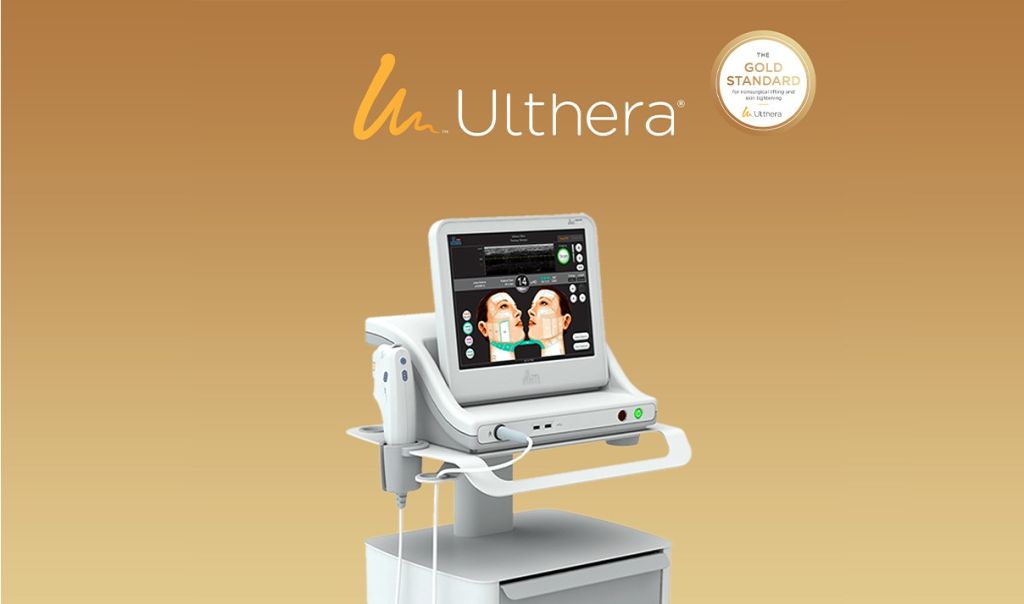
The Ulthera machine uses ultrasound waves to create focused heat energy at specific depths in the skin. Unlike other treatments that heat the entire area, Ulthera’s ultrasound energy is concentrated at exact target depths, similar to how a magnifying glass concentrates sunlight on a single point. This precise targeting allows the device to reach the SMAS layer, the deep supporting structure beneath the skin, without damaging the skin surface.
Stage Two: Collagen Denaturation and Contraction
When the focused ultrasound reaches the target depth, it creates controlled heating that causes collagen fibers to denature (break down) and contract immediately. This immediate contraction creates an instant lifting effect that you can feel during the procedure. The heat also triggers the body’s natural wound-healing response, which signals the production of new collagen.
Stage Three: Collagen Regeneration and Progressive Lifting
Over the following weeks and months, your body produces new collagen to replace the denatured collagen. This gradual collagen regeneration creates progressive improvement in skin tightness, texture, and lifting. The results continue to improve for up to three months after treatment, making Ulthera unique because the benefits continue long after the procedure is complete.
Main Effects of Ulthera
Although results vary from person to person, you can generally expect the following effects:
Immediate Effects: Immediately after treatment, you may feel the skin is slightly tighter. Within the first few days, the face appears slightly more lifted and defined. Some people notice an immediate lifting effect in the jaw and cheek areas.
Progressive Effects: From two to four weeks after treatment, more noticeable lifting and tightening become apparent. Skin texture improves, and fine lines become less visible. The progressive effects continue for up to three months as collagen regeneration continues.
Main Improvements: Lifted and tightened skin, improved jawline definition, reduced sagging cheeks, softened nasolabial folds, reduced fine lines and wrinkles, improved skin texture, enhanced skin firmness, better facial contours, and an overall more youthful appearance.
Ulthera vs. Other Lifting Treatments
Understanding how Ulthera compares to other popular treatments helps you choose the right option:
Ulthera vs. Thermage: Both use energy-based technology for lifting, but Ulthera uses ultrasound while Thermage uses radiofrequency. Ulthera typically provides more dramatic results and reaches deeper layers, making it more effective for significant sagging. Thermage is better for overall skin quality on a wider area.
Ulthera vs. Inmode: Inmode combines radiofrequency with electrical stimulation and is especially effective for fat reduction and double chin improvement. Ulthera is more focused on lifting and tightening. Many people get both treatments for comprehensive facial rejuvenation.
Ulthera vs. Shurink: Both use HIFU ultrasound technology. Shurink is a newer technology that may have shorter treatment times. Both are effective for lifting, and the choice often comes down to doctor preference and clinic availability.
Who Should Get This Treatment?
Ulthera is especially recommended for the following people:
People with moderate to severe sagging skin: If your skin is visibly drooping or losing definition, Ulthera’s deep-layer lifting is very effective.
People with deep wrinkles: Especially deep forehead lines, nasolabial folds, and marionette lines can be significantly improved.
People wanting a natural facelift alternative: If you are interested in facial rejuvenation but want to avoid surgery, Ulthera provides excellent results comparable to some surgical procedures.
People in their 40s and older: This treatment is especially popular among people in their 40s, 50s, and beyond who are experiencing moderate aging signs.
People wanting to prevent further sagging: Younger people in their 30s can use Ulthera preventatively to maintain skin elasticity and prevent future sagging.
People with specific problem areas: If particular areas like the jawline, cheeks, or neck need lifting and tightening, Ulthera can be customized to target these areas.
How Is the Procedure Done?
The procedure is performed in stages and requires careful planning:
Before Treatment: Your face is cleaned thoroughly and photos are taken for comparison. The doctor marks the treatment areas on your face, identifying the specific zones that need lifting and tightening. Ultrasound gel is applied to the skin to help the ultrasound waves transmit effectively.
During Treatment: The doctor holds the Ulthera handpiece against your skin and delivers ultrasound energy to the target layers. You will feel the device moving across your face, and you may feel warmth or slight tingling sensations. Many people describe the sensation as a gentle tapping or vibration. The procedure is performed layer by layer, starting from the deepest SMAS layer, then the dermis layer, and finally the superficial layers. The entire procedure typically takes 60-90 minutes depending on the areas treated and your skin condition.
Treatment Zones: The doctor typically treats areas including the cheeks, jawline, neck, forehead, and eyebrow area. The intensity and number of pulses are customized based on your skin type and needs.
Is There Pain?
Ulthera involves ultrasound energy, so you will feel sensations during the procedure. However, the experience varies from person to person:
Pain Level: Most people describe the sensation as tolerable to mild discomfort rather than sharp pain. You will feel warmth, tingling, or a gentle tapping sensation. Some people find certain areas more sensitive than others, particularly around the jawline and neck.
Individual Variation: Pain tolerance varies greatly. Some people experience minimal discomfort, while others find the sensation more intense. The procedure is generally considered less painful than people expect.
Pain Management: Numbing cream can be applied before treatment to reduce sensation. Some clinics offer stronger pain management options like local anesthesia or oral pain medication. Communicating with your doctor during the procedure about your comfort level is important, as they can adjust settings to make the experience more comfortable.
After the Procedure: You should not experience significant pain after treatment. Some mild tenderness or slight achiness is normal and usually subsides within a day or two.
How Many Sessions Do I Need?
Most people see excellent results from a single Ulthera session. However, some people benefit from additional sessions:
Single Session: One Ulthera treatment can produce significant lifting and tightening results. Many people achieve their desired outcome after one procedure.
Multiple Sessions: Some people opt for a second session 6-12 months later to enhance results further or to maintain results over time. Those with severe sagging may also benefit from two sessions spaced 2-3 months apart for more dramatic results.
Maintenance Sessions: To maintain results long-term, some people schedule maintenance treatments every 12-18 months.
Customized Plan: Your doctor will recommend the optimal number of sessions based on your skin condition, the severity of sagging, and your desired results.
How Long Do the Results Last?
Ulthera’s results generally last 6 to 12 months, with many people experiencing continued improvement for up to three months after treatment.
The durability depends on several factors including your age, skin type, lifestyle, sun exposure, and overall health. People who take good care of their skin, use sunscreen, and maintain a healthy lifestyle often experience results lasting closer to 12 months or longer.
To maintain long-term results, many people schedule maintenance sessions every 12-18 months. These maintenance sessions help preserve the lifting and tightening effects as natural aging continues.
How Much Does It Cost?
The cost of Ulthera treatment varies depending on the clinic, the areas treated, and the extent of treatment needed. Generally, one session costs 800,000 to 1,500,000 won, depending on the clinic and treatment scope.
Factors affecting price include the number of ultrasound pulses delivered, the areas treated, and the clinic’s location and reputation. It is important to choose a clinic with experienced doctors and genuine Ulthera equipment rather than seeking the cheapest option, as treatment quality greatly affects results.
What Is Downtime?
One of Ulthera’s major advantages is that it has almost no downtime. You can return to normal activities immediately after treatment:
Immediate Resumption of Activities: You can apply makeup and resume daily activities right after the procedure. There is no need to take time off work or modify your schedule.
Temporary Side Effects: Some people experience mild redness or slight swelling immediately after treatment, but these typically fade within a few hours to one day. Rarely, some people may experience temporary tenderness or sensitivity in treated areas.
Skin Care After Treatment: You can continue your normal skincare routine the same day, though some doctors recommend being gentle with the treated areas for 24 hours.
Exercise and Activities: You can resume exercise and all normal activities immediately. Unlike treatments with significant downtime, Ulthera does not require any special restrictions.
Are There Any Side Effects?
Ulthera is considered very safe, but like all medical procedures, there are potential side effects:
Common Side Effects: Mild redness, slight swelling, and temporary tenderness are the most common side effects. These usually resolve within hours to one day.
Rare Side Effects: In rare cases, temporary bruising, numbness, or tingling can occur. These typically resolve within a few days to weeks.
Very Rare Side Effects: Temporary nerve irritation or very slight skin irritation can occur in rare cases. Severe complications are extremely rare with proper technique.
Side Effect Prevention: Choosing a clinic with experienced Ulthera operators greatly reduces the risk of side effects. The doctor’s skill in using the device and setting appropriate energy levels is crucial for safety and effectiveness.
Post-Treatment Care Tips
Following proper aftercare helps maximize Ulthera results:
Sun Protection: Apply SPF 30 or higher sunscreen daily. Sun exposure can interfere with collagen regeneration and fade results. This is the most important aftercare step.
Hydration: Drink plenty of water to support skin healing and collagen production. Aim for at least eight glasses per day.
Moisturizing: Use a good moisturizer to keep your skin hydrated. Well-hydrated skin heals better and maintains better collagen production.
Avoid Extreme Heat: For the first 24-48 hours, avoid saunas, steam rooms, and very hot baths, as heat can increase inflammation.
Gentle Skincare: Use gentle, non-irritating skincare products for the first week after treatment. Avoid harsh scrubs, strong chemical peels, or irritating ingredients.
Avoid Certain Treatments: Avoid other skin treatments like laser, microdermabrasion, or chemical peels for at least one week after Ulthera.
Sleep Well: Get adequate sleep to support your body’s collagen regeneration process.
Healthy Lifestyle: Maintain a healthy diet, exercise regularly, and manage stress. These factors support skin health and collagen production.
Can I Combine Ulthera With Other Treatments?
Ulthera works excellently in combination with other treatments for enhanced results:
Ulthera + Inmode: Combining Ulthera’s deep lifting with Inmode’s fat reduction and skin tightening creates comprehensive facial rejuvenation. Ulthera handles structural lifting while Inmode improves overall skin quality.
Ulthera + Juvelook: Ulthera’s lifting combined with Juvelook’s collagen-stimulating injections provides both structural support and skin quality improvement. Results look natural and comprehensive.
Ulthera + Thermage: Both lifting treatments together provide more comprehensive tightening across all skin layers, resulting in more dramatic lifting effects.
Ulthera + Aqua Peel: A gentle Aqua Peel before Ulthera can prepare the skin and potentially enhance ultrasound penetration, though most doctors do these on separate occasions.
Ulthera + Rejuran Healer: Rejuran Healer’s regenerative effects complement Ulthera’s lifting, creating superior anti-aging results.
Final Tips for Beginners
Important things to know before getting Ulthera treatment:
Choose an Experienced Clinic: Ulthera requires skill and experience to perform well. Choose a clinic with doctors who have extensive experience with the treatment and can show excellent before-and-after results.
Have a Detailed Consultation: Before treatment, discuss your concerns, expectations, and desired results thoroughly with the doctor. The doctor should examine your skin carefully and create a customized treatment plan.
Have Realistic Expectations: While Ulthera provides excellent results, results are progressive and continue improving over three months. Do not expect dramatic changes immediately after treatment.
Take Before and After Photos: Having clear photos helps you track the gradual improvements and appreciate the results as they develop.
Plan Timing Strategically: Although there is no downtime, you might prefer to schedule treatment when you are not expecting important social events within a week, just in case of any temporary redness.
Maintain Results: To enjoy long-term benefits, plan for maintenance sessions every 12-18 months rather than waiting for all effects to completely fade.
Invest in Good Sunscreen: After treatment, using high-quality SPF 50+ sunscreen daily is crucial for maintaining results and supporting collagen regeneration.
Follow All Aftercare Instructions: The results depend not only on the procedure itself but also on proper aftercare. Follow all your doctor’s recommendations carefully.
Ulthera is an excellent treatment for people seeking significant skin lifting and tightening without surgery. If you are a beginner considering this treatment, use this information to make an informed decision and find an experienced clinic for your consultation!