logo
Back to Magazine List

Why Americans Are Flying to South Korea for Medical Treatment: Save Up to 90% on Healthcare Costs

Your Medical Costs Are 3-10 Times Higher Than Seoul. Here's What You Need to Know About Medical Tourism and Healthcare Savings.

Table of Contents

  1. Introduction: The American Healthcare Cost Crisis
  2. Dermatology Cost Comparison: Botox, Fillers, and Laser Treatment
  3. Cosmetic Surgery Prices: Why Rhinoplasty and Double Eyelid Surgery Are Cheaper in Seoul
  4. Vision Correction: LASIK and ICL Lens Implant Costs
  5. Dental Work: Root Canals and Implants (Why Americans Pay 8X More)
  6. Hair Transplant Surgery: The Biggest Savings (Up to 90% Less)
  7. Obstetrics & Gynecology: Childbirth and Pregnancy Care Costs
  8. Urology: Men's Health Screening and Treatment Prices
  9. Health Screening Packages: Annual Physical and Preventive Care

Introduction: The American Healthcare Cost Crisis and Medical Tourism Solution

Keywords: Medical tourism, healthcare costs, South Korea medical tourism, American healthcare prices, save money on medical procedures

If you're an American living in or near New York, chances are you've experienced sticker shock at a hospital bill. That root canal that cost $800? It's $100 in Seoul. That hair transplant quote of $25,000? Try $2,500 instead. The nose surgery your dermatologist quoted at $6,000? Just $1,000 in South Korea.

This isn't an exaggeration. It's not marketing hype. It's medical reality, backed by hard data comparing actual treatment costs in Manhattan and Seoul.

Thousands of Americans are already making the leap. They're booking flights to South Korea, not for tourism, but for medical procedures. And they're saving enough money to pay for their entire trip while still coming out ahead financially. Some are saving 80-90% on their procedures.

According to recent healthcare data, Americans spend more on medical care than any other developed nation. Yet the quality of care isn't proportionally higher. This has led to an explosive growth in medical tourism—a $100+ billion global industry where patients travel abroad for affordable, high-quality healthcare.

South Korea has emerged as the top destination for American medical tourists, particularly for cosmetic surgery, dental work, and hair restoration. The combination of world-class expertise, advanced technology, and dramatically lower costs has created a perfect storm of opportunity for cost-conscious Americans.

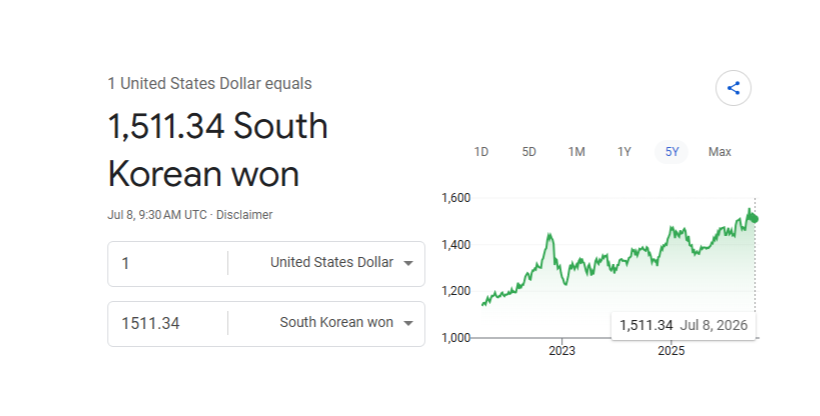
Currency Note: All prices in this article are in US dollars. Exchange rate used: 1 USD = 1,500 Korean Won

The Medical Tourism Economics – Detailed Breakdown and ROI Calculation

Keywords: Medical tourism cost savings, how much to save medical tourism, trip cost vs treatment cost, ROI medical travel

Let's Do the Math: Medical Tourism Financial Analysis

Scenario 1: Single Procedure (Cosmetic Surgery)

Your situation: Need rhinoplasty

New York Costs:

  • Surgeon fee: $6,000
  • Hospital/facility fee: $1,000
  • Anesthesia: $500
  • Follow-up appointments: $500
  • Total: $8,000

Seoul Medical Tourism:

  • Flight (roundtrip): $700
  • Hotel (14 nights): $900
  • Procedure (including consultations): $1,200
  • Food and transportation: $400
  • Total: $3,200

Your Savings: $4,800 (60% savings) Plus: 14-day vacation in an amazing city


Scenario 2: Multiple Procedures (Cosmetic + Dental)

Your situation: Hair transplant + dental work

New York Costs:

  • Hair transplant (4,000 grafts): $24,000
  • Dental implant + crown: $4,500
  • Total: $28,500

Seoul Medical Tourism:

  • Flights: $800
  • Hotel (21 nights): $1,200
  • Hair transplant: $3,500
  • Dental implant + crown: $700
  • Food and transportation: $600
  • Total: $6,800

Your Savings: $21,700 (76% savings) Plus: 3-week vacation


Scenario 3: Complete Health Overhaul

Your situation: Botox + fillers + skin treatment + health screening

New York Costs:

  • Botox: $400
  • Fillers: $600
  • Laser skin treatment: $1,500
  • Health screening: $3,000
  • Total: $5,500

Seoul Medical Tourism:

  • Flights: $600
  • Hotel (10 nights): $700
  • Botox: $200
  • Fillers: $300
  • Laser skin treatment: $400
  • Health screening: $1,200
  • Food and transportation: $300
  • Total: $3,700

Your Savings: $1,800 (33% savings)


The ROI Calculation

Return on Investment for Medical Tourism:

For most medical tourism trips, the ROI is 200-400%, meaning your investment in travel pays for itself multiple times over through procedure savings.


Are Korean Doctors Legitimate? Safety, Credentials, and Verification

Keywords: Korean doctor credentials, medical tourism safety, are Korean surgeons qualified, medical licensing Korea, verify doctor credentials

Yes. Absolutely. But Here's How to Verify

South Korean medical credentials are strictly regulated by the Korean Medical Association. Doctors must complete extensive education and pass rigorous licensing exams. Malpractice suits exist in Korea just as they do in America—surgeons take their work seriously.

In fact, many Korean surgeons have trained in the United States, worked in American hospitals, or pursued additional certifications from international bodies. Some are fellowship-trained in specialties like rhinoplasty or hair restoration.

When you choose a reputable clinic in Seoul (and you absolutely should do your research), you're getting a legitimately qualified surgeon—often with more experience in your specific procedure than American surgeons.

How to Verify Your Surgeon's Credentials

Step 1: Check Medical License

  • Korean Medical Association (KMA) maintains a registry
  • Ask the clinic to provide their doctor's license number
  • Verify on the KMA website (English version available)

Step 2: Education Verification

  • Seoul National University School of Medicine
  • Yonsei University College of Medicine
  • Korea University College of Medicine These are equivalent to or exceed American medical schools in rigor and prestige.

Step 3: Specialty Certification

  • Ask for fellowship certificates (e.g., rhinoplasty fellowship)
  • Many Korean surgeons pursue additional training in the U.S. or Europe
  • Request proof of continuing education

Step 4: Experience Assessment

  • Ask how many procedures the surgeon has performed
  • Request before-and-after photographs (lots of them—50+)
  • Ask for the percentage of complications
  • Request references from international patients

Step 5: Professional Memberships

  • International Society of Aesthetic Plastic Surgeons (ISAPS)
  • American Society of Plastic Surgeons (ASPS) - some Korean surgeons are members
  • Korean Society of Plastic and Reconstructive Surgeons (KSPRS)

Step 6: Read International Reviews

  • Google Reviews (international patient reviews)
  • YouTube (patient testimonials and procedure videos)

Step 7: Look for Red Flags

  • ❌ Clinic pushes you to decide quickly
  • ❌ Vague pricing or unclear package details
  • ❌ No before-and-after photos
  • ❌ Doctor isn't available for consultations
  • ❌ Clinic can't provide references
  • ❌ No mention of complications or realistic expectations

Step 8: Look for Green Flags

  • ✅ Clinic has clear pricing and detailed packages
  • ✅ Extensive before-and-after portfolio
  • ✅ Doctor available for video consultations
  • ✅ Clear complication rates and revision policies
  • ✅ International patient testimonials
  • ✅ Hospital accreditation (JCI International accreditation is gold standard)

Korean Hospital Accreditation Standards

Look for these accreditations:

  • JCI (Joint Commission International): Gold standard for international hospitals
  • Korean Hospital Association Certification: Korean standard
  • Ministry of Health and Welfare Approval: Government approval

Real Credential Verification Success Story

Robert, 42, from Long Island: "I was nervous about getting my hair transplant in Korea, so I did thorough research. I found the surgeon's credentials on the Korean Medical Association website, confirmed his fellowship training in hair restoration, looked at his 1,000+ before-and-after photos, and talked to 5 previous patients. The clinic was completely transparent about everything. I felt confident proceeding. Now I tell people: verifying credentials is actually easier with Korean surgeons than American surgeons because they're often more transparent and have more experience to demonstrate."


How to Plan Your Medical Trip to Seoul

Keywords: Medical tourism planning, how to book medical trip, Korean medical tourism process, Seoul medical vacation planning, medical travel logistics

A Step-by-Step Guide to Planning Your Medical Tourism Journey

Step 1: Research and Choose Your Clinic (3-6 Months Before)

Identify Your Procedure:

  • Define exactly what you need
  • Get quotes from 2-3 American clinics to establish baseline costs

Research Seoul Clinics:

  • Use Google Search, RealSelf, YouTube for reviews
  • Look at before-and-after photos
  • Read patient testimonials (especially from Americans)
  • Check accreditations and credentials
  • Compare prices across 3-5 top-rated clinics

Create a Shortlist:

  • Narrow down to 2-3 clinics you trust most

Step 2: Book Your Initial Consultation (2-3 Months Before)

Contact the Clinic:

  • Email the clinic with photos of your area (for cosmetic procedures)
  • Request information in English
  • Ask about their package pricing

Video Consultation:

  • Schedule a video call with the doctor (usually free)
  • Discuss your goals and expectations
  • Ask questions about the procedure, recovery, and risks
  • Request detailed pricing breakdown

Get Written Quotes:

  • Clinic should provide detailed written quotes
  • Should include: procedure costs, facility fees, consultations, post-op care
  • Should specify what's included in the package

Step 3: Make Your Decision and Book (6-8 Weeks Before)

Compare Your Options:

  • Cost vs. quality
  • Clinic experience with your procedure
  • Your comfort level with the surgeon
  • Communication quality

Sign Consent Forms:

  • Request English versions of all forms
  • Understand the risks and benefits
  • Ask questions about anything unclear

Make Your Deposit:

  • Usually 20-50% deposit to hold your surgery date
  • Get written confirmation of your surgery date
  • Understand the cancellation policy

Book Your Flights:

  • Flexible return date (in case of unexpected recovery needs)
  • Direct flights preferred (less recovery stress)
  • Business class if budget allows (easier recovery)

Step 4: Plan Your Logistics (4-6 Weeks Before)

Accommodation:

  • Airbnb apartment near clinic (cheaper than hotels, better for recovery)
  • Or boutique hotel with helpful concierge
  • Close to clinic (walkable or short taxi ride)

Support Person:

  • Consider bringing a friend or family member
  • They can help with post-op care and mobility
  • Companionship during recovery

Insurance and Medical Records:

  • Understand your insurance won't cover elective procedures abroad
  • Bring medical records and imaging from U.S. doctors
  • Get travel insurance (medical emergency coverage)

Visa and Travel Documents:

  • Check visa requirements (Americans typically get 90-day visa-free entry)
  • Passport must be valid for 6+ months
  • Arrange travel insurance

Step 5: Prepare for Your Procedure (2-4 Weeks Before)

Medical Preparation:

  • Follow surgeon's pre-operative instructions exactly
  • Stop certain medications (blood thinners, etc.)
  • Don't smoke (increases complication risk)
  • Avoid alcohol for 1-2 weeks before

Physical Preparation:

  • Get your blood work done (some clinics may require this)
  • Be in good health
  • Get adequate sleep
  • Exercise to build strength for recovery

Mental Preparation:

  • Research the procedure thoroughly
  • Understand realistic expectations
  • Watch recovery videos from real patients
  • Mentally prepare for recovery time

Practical Preparation:

  • Arrange time off work
  • Notify your employer you'll be away
  • Arrange pet/house care
  • Pack appropriately for recovery

Step 6: Arrive and Rest (2-3 Days Before Procedure)

Arrive Early:

  • 2-3 days before surgery allows time adjustment
  • Helps with jet lag
  • Gives time for pre-op blood work and final consultations

Get Comfortable:

  • Explore your accommodation
  • Find nearby restaurants and pharmacies
  • Meet your support person if they're meeting you there
  • Rest well before surgery

Final Consultation:

  • Meet with your surgeon in person
  • Final photos and measurements (if applicable)
  • Final questions and clarifications
  • Receive final pre-op instructions

Step 7: Have Your Procedure

Surgery Day:

  • Arrive early at the clinic
  • Final paperwork and signing
  • Follow all pre-op instructions (fasting, etc.)
  • The procedure (usually 1-4 hours depending on procedure)
  • Recovery room monitoring
  • Return to accommodation with support person

Immediate Post-Op:

  • Follow all post-op instructions exactly
  • Take prescribed medications
  • Rest for the first few days
  • Limited activity per surgeon's instructions
  • Multiple follow-up appointments over next 2-4 weeks

Step 8: Recovery in Seoul (5-14 Days Depending on Procedure)

First Week:

  • Limited activity, mostly in accommodation
  • Attend scheduled follow-up appointments
  • Light walking for circulation
  • Take prescribed medications religiously
  • Manage pain and swelling per instructions

Second Week:

  • Gradually increase activity
  • Can explore Seoul at a slow pace
  • Continue follow-up appointments
  • Some procedures allow return to normal activity by week 2

Stay for Complete Recovery:

  • Don't rush back home
  • Complete rest allows better healing
  • Follow-up appointments often necessary before travel

Step 9: Return Home and Continue Recovery

Before Flying Home:

  • Get clearance from your surgeon
  • Confirm it's safe to fly
  • Understand any flight restrictions

Return to Normal Activities:

  • Resume work gradually (may need more time off)
  • Follow surgeon's activity restrictions
  • Continue taking medications
  • Attend any additional local appointments

Remote Follow-Up:

  • Schedule video consultations with your surgeon
  • Before-and-after photo check-ins
  • Answer any post-op questions
  • Monitor for any complications

Build Your Recovery Support:

  • Stay in contact with clinic
  • Know how to reach surgeon for emergencies
  • Don't hesitate to contact if anything seems wrong

Medical Travel Korea MTK 8-Part Series - Cost Comparison Guide

Back to Magazine List