



Editorially Reviewed by MTK Editorial Team · Updated September 8, 2026
Booking note: All hospitals and clinics available through MTK are required to hold Registered Foreign Patient Attraction Institution status in Korea before booking access is provided. MTK verifies registration status and can coordinate international-patient language assistance for bookings made through the platform.
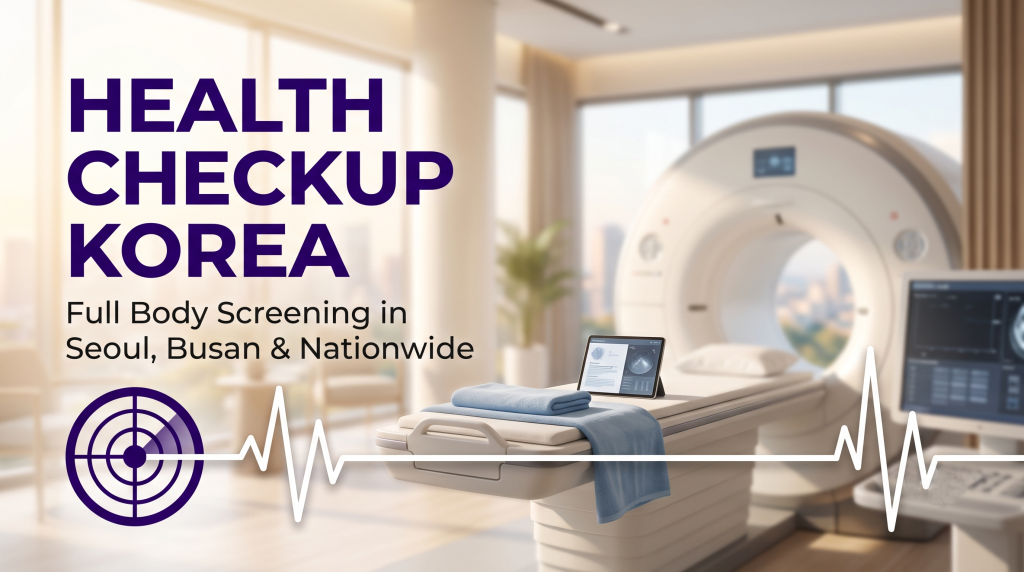
Quick Answer: A health checkup in Korea for foreigners is usually a self-pay preventive screening program. Published provider prices show that many basic-to-comprehensive programs fall around ₩500,000–₩1,800,000, while premium, MRI-rich or high-touch programs can rise to roughly ₩2,600,000–₩7,000,000+. Many programs are designed for a half day to a full day. Depending on the package and individual risk, a checkup may include blood and urine tests, ultrasound, gastroscopy or colonoscopy, cardiovascular testing and selected CT or MRI. A “full body health check” is a consumer search term rather than one standardized medical package, so the most appropriate program should be chosen by age, symptoms, medical history, family history, previous results and clinician assessment—not simply by the number of tests.
MTK Safety & Transparency
- All hospitals and clinics available through MTK must hold Registered Foreign Patient Attraction Institution status before platform booking access is provided.
- MTK verifies registration status before booking access is enabled.
- International-patient language assistance can be coordinated through MTK.
- Screening suitability and the final test plan should be confirmed with the treating medical team based on individual risk factors.
Health Checkup Korea: Full Body Screening at a Glance
| Question | Practical Answer |
|---|---|
| How long does it take? | Many programs are structured for a half day or full day. Sedated endoscopy, multiple imaging studies, specialist consultations or stay-in programs can take longer. |
| What can be included? | Blood and urine tests, physical measurements, X-ray, ultrasound, ECG, endoscopy and selected CT/MRI depending on the program and individual risk. |
| Does “full body” mean whole-body MRI? | No. “Full body checkup” is not a standardized package name, and many comprehensive programs do not include whole-body MRI. |
| Where can foreigners book? | This guide covers MTK-listed options in Seoul and a nationwide network with branches in Busan, Daegu, Gwangju, Suwon and Jeju. |
| How should I choose? | Start with age, medical and family history, symptoms, previous screening and physician assessment rather than choosing the package with the most tests. |
How Much Does a Health Checkup in Korea Cost in 2026?
Health screening prices vary by center, test selection, imaging, endoscopy, sedation, specialist consultation and service level. The ranges below are planning references compiled by MTK from publicly available 2026 screening-center and clinic program pricing; they are not fixed MTK prices and are not quotes from every institution in this guide.
| Typical Program Type | 2026 Planning Reference | How to Read It |
|---|---|---|
| Basic / Standard | about ₩500,000–₩1,100,000 | Public examples include We Want Healthcare's basic program at ₩550,000–₩650,000 and Chaum's basic program around ₩960,000–₩1,090,000. |
| Comprehensive / Selected Imaging | about ₩700,000–₩1,800,000 | Public examples include We Want Healthcare Smart programs at ₩700,000–₩1,000,000, Signature programs at ₩1,300,000–₩1,800,000, and KMI foreigner-focused specialty packages around ₩800,000–₩1,200,000. |
| Specialized Cancer / Cardiac / GI | about ₩900,000–₩3,000,000+ | Risk-focused programs vary widely by endoscopy, CT/MRI, specialist review and organ-specific testing. KMI publishes foreigner-focused specialty packages around ₩900,000–₩1,200,000; higher-complexity programs at premium centers can cost substantially more. |
| Premium / MRI-rich / High-touch | about ₩2,600,000–₩7,000,000+ | We Want Healthcare lists premium programs around ₩2,600,000–₩2,700,000, while Chaum publishes premium MRI-rich programs from roughly ₩4,920,000 to above ₩7,000,000 depending on sex, age and package. |
| Stay-in / Executive-style | often ₩6,000,000+ | Some premium centers publish one-night or executive-style screening programs above ₩6,000,000. These are service-intensive programs and should not be treated as a medically necessary benchmark. |
What changes the price?
- MRI or CT: the body region, number of studies and whether advanced imaging is included can materially change package cost.
- Gastroscopy or colonoscopy: endoscopy, sedation, pathology and procedures such as biopsy or polyp removal may affect the final bill.
- Specialist consultations: some programs include physician review, while others add specialist visits only when indicated.
- Package depth: laboratory panels, ultrasound and cardiovascular studies vary substantially between tiers.
- Service level: private rooms, executive coordination, meals or stay-in programs can increase price without necessarily meaning that the medical screening itself is more appropriate for a given patient.
How MTK built this price reference
MTK reviewed current official provider price pages available in September 2026, including KMI Global's foreigner-focused programs and add-on prices, We Want Healthcare's published comprehensive and MRI-inclusive packages, and Chaum's published basic, specialized and premium screening programs. Because package names are not standardized, the ranges above are planning bands rather than a claim that every hospital uses the same tiers.
Important: Some Korean hospital price pages are restricted to domestic patients. MTK does not use domestic-only prices as a foreign-patient quote. Always confirm the exact package, eligibility and final price directly with the institution or through MTK before booking.
What's in This Guide
- What a Korea full body health check can include
- MRI, CT, ultrasound, gastroscopy and colonoscopy
- Why more testing is not automatically better
- What foreigners should know before booking
- Seoul vs Busan vs nationwide screening
- Health checkup centers and matching guidance
- Preparation, timing, results and travel planning
- Frequently asked questions
What Does a Full Body Health Check in Korea Include?
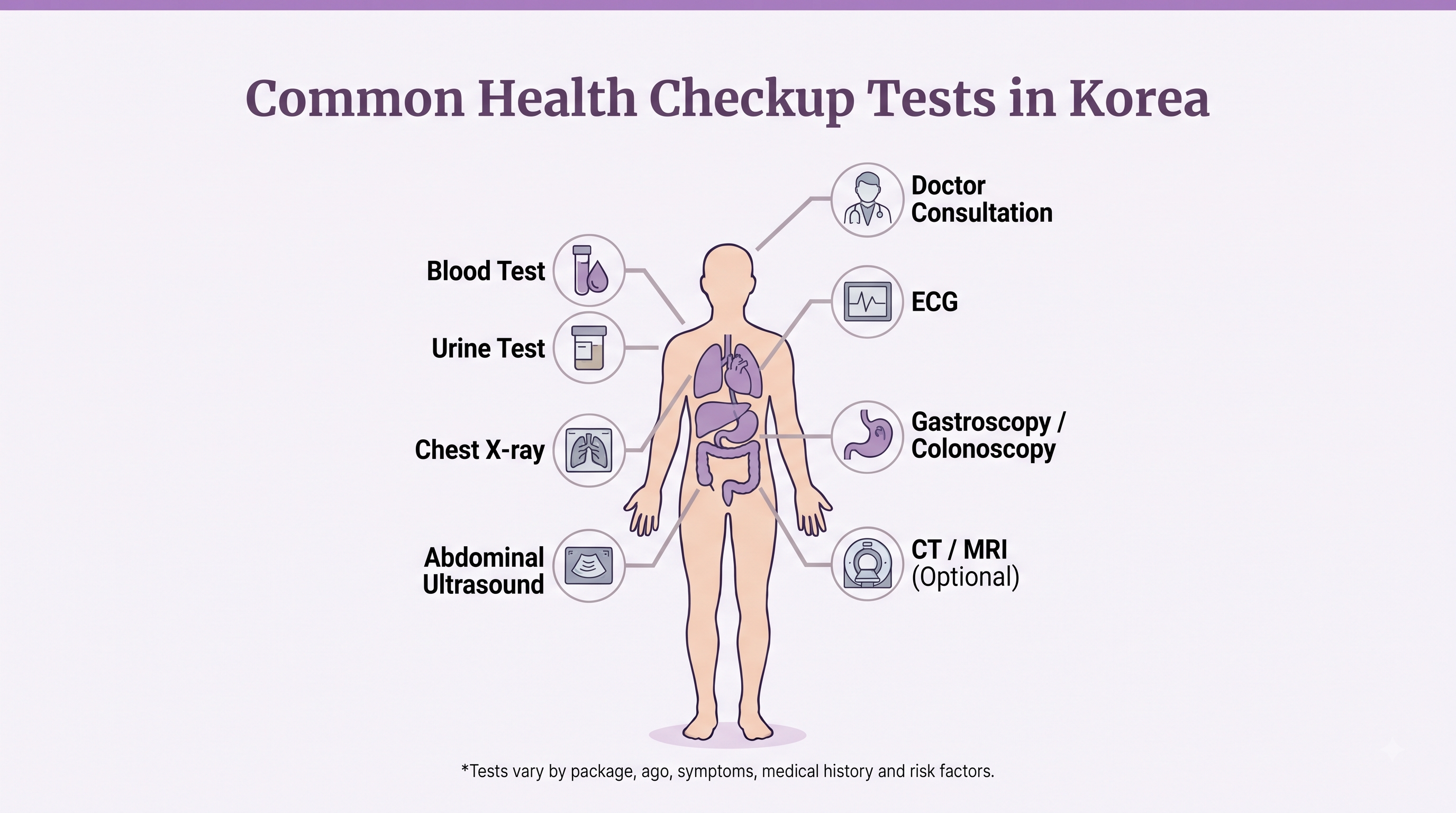
A Korean health checkup is usually organized as a coordinated preventive screening program at one medical center. The exact scope depends on the selected package and on individual risk factors. Common search phrases such as “Korea full body health check,” “full body checkup Korea,” “health screening Korea” and “medical checkup Korea” do not describe one fixed medical protocol.
| Test Category | Common Examples | What to Confirm |
|---|---|---|
| Basic measurements & labs | Blood pressure, body measurements, blood tests, urinalysis | Which laboratory markers are included and whether fasting is required. |
| Ultrasound | Abdominal, thyroid, carotid, breast or pelvic ultrasound depending on risk and program | Which organ systems are actually included rather than assuming “ultrasound” means a complete scan. |
| Cardiovascular testing | ECG and selected vascular or cardiac studies | Whether advanced cardiac testing is routine, optional or physician-directed. |
| Endoscopy | Gastroscopy and/or colonoscopy, sometimes with sedation | Preparation, sedation, pathology, biopsy/polyp removal policy and post-sedation travel instructions. |
| CT / MRI | Selected brain, chest, abdomen or other region-specific imaging | Body region, protocol, contrast use, radiation exposure for CT and whether imaging is clinically appropriate. |
| Sex- or risk-specific screening | Cervical, breast, prostate or other age/risk-based testing | Whether the test is appropriate for age, sex, family history and previous results. |
MRI, CT, Ultrasound and Endoscopy: What Is the Difference?
MRI uses magnetic fields and radio waves rather than ionizing radiation, but a larger MRI package is not automatically the best screening choice for a healthy person without symptoms. The body region and clinical question matter.
CT can provide detailed cross-sectional imaging quickly but uses ionizing radiation. Whole-body CT should not be selected simply because it sounds more comprehensive.
Ultrasound uses sound waves and is commonly used for selected organs, but the usefulness of a given study depends on the target organ and individual risk.
Gastroscopy and colonoscopy examine the gastrointestinal tract directly. These tests can require fasting, bowel preparation and, when sedation is used, specific transportation and recovery instructions.
More tests are not automatically better.
Professional guidance does not support indiscriminate whole-body CT screening for healthy people without symptoms, and evidence is insufficient to recommend routine total-body MRI screening for asymptomatic people without relevant risk factors. Many tumor-marker tests are also not suitable as stand-alone population screening tests. A better package is one matched to age, symptoms, medical history, family history, previous results and clinician assessment.
Health Screening vs Diagnostic Testing
A preventive health screening is designed to look for risk factors or early signs in people who may not have symptoms. Diagnostic testing is different: it investigates a specific symptom, abnormal result or known medical condition. A screening package should not replace a doctor-led diagnostic evaluation when symptoms or abnormal findings require targeted assessment.
Health Checkup in Korea for Foreigners: What to Know Before Booking
| Practical Question | What to Know |
|---|---|
| Do I need Korean health insurance? | International visitors commonly use self-pay screening packages. For example, Seoul National University Hospital Gangnam Center describes its checkups as private medical checkups rather than NHS programs. Coverage and eligibility still vary by residency status, institution and service, so confirm payment conditions before booking. |
| What identification is needed? | Requirements vary by institution. KMI Global, for example, requires foreign patients to bring a passport for its global checkup program. Confirm the exact identification required by your center before the visit. |
| Is English support available? | Language support varies by center. For MTK bookings, international-patient language assistance can be coordinated through the platform. |
| Can results be provided in English? | English result availability and report format vary by institution. Confirm the language, delivery method and turnaround time before booking. |
| Will I need to fast? | Often, depending on blood tests, abdominal imaging and endoscopy. Follow the exact center instructions rather than a generic fasting rule. |
| What about medications? | Ask the medical team specifically about diabetes medication, anticoagulants and other regular medicines. Do not stop prescribed medication unless instructed by an appropriate clinician. |
| What if I choose sedation? | Confirm whether an escort, transportation restriction or recovery period is required after sedated endoscopy. |
| When will I get results? | Preliminary discussion may be available sooner than a complete written report. Turnaround varies by center and by tests such as pathology. KMI Global states that its multilingual report can take about two weeks or longer, so confirm timing if you are leaving Korea soon. |
Seoul vs Busan vs Nationwide: Where Should You Book?
The medical quality of an individual center cannot be determined by city alone. Location is primarily a travel and logistics decision; the center, test plan and medical team matter more.
| Location | Practical Considerations |
|---|---|
| Seoul | Largest concentration of university-hospital-affiliated centers, specialized screening clinics and premium programs; practical for travelers staying in Gangnam, Myeongdong or central Seoul. |
| Busan | Useful for travelers based in southern Korea who do not want to add a separate Seoul visit. Nationwide networks such as KMI operate a Busan branch. |
| Jeju | Can fit travelers combining screening with a Jeju itinerary, but compare program scope and follow-up logistics before choosing based only on convenience. |
| Nationwide network | May suit patients who value a standardized network across several Korean cities or whose travel schedule is not limited to Seoul. |
How Korea's Foreign-Patient Registration System Works
Under Korea's framework for attracting international patients, medical institutions that attract foreign patients must register with the relevant authorities and satisfy statutory requirements. Medical Korea describes this registration system as part of the framework for qualified and orderly foreign-patient care.
All hospitals and clinics available through MTK are required to hold Registered Foreign Patient Attraction Institution status before booking access is provided, and MTK verifies registration status before platform booking access is enabled.
Health Checkup Centers in Korea for International Patients
This guide includes screening options in Gangnam, Myeongdong and other parts of Seoul, plus a nationwide network with branches in Busan, Daegu, Gwangju, Suwon and Jeju.
Clinics are listed in no particular order of ranking or preference.
Chaum Clinic — Cheongdam, Gangnam
Integrated Medical & WellnessCHA Medical Group NetworkMedical Zone + Anti-Aging Zone
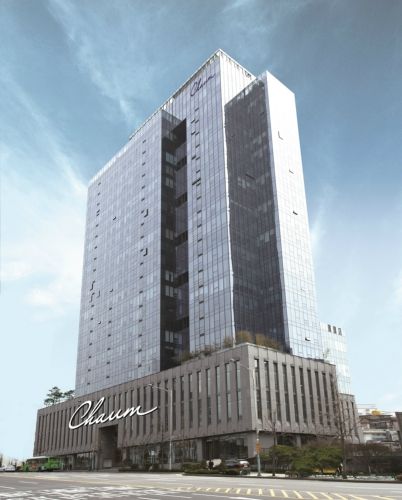
Chaum Clinic is part of the CHA Medical Group network and positions itself at the intersection of comprehensive diagnostics and holistic anti-aging medicine. The facility spans two main levels — a dedicated Medical Zone and an Anti-Aging Zone — and operates under the CHA Health System, covering premium health check-ups alongside specialized clinics such as the Power Aging Clinic, Immune Enhancement Clinic, and Metabolic Syndrome Center. International-patient language assistance can be coordinated through MTK for appointments booked through the platform.
- May suit: Patients wanting a comprehensive health checkup Korea experience combined with anti-aging and hormone-focused specialist consultations in one visit.
- Notable services: Premium health check-up programs, Power Aging Clinic, Hormone Treatment Center, Detox Slimming Center, Dermatology and Plastic Surgery Clinic, advanced MRI and ultrasound imaging.
- Address: 442, Dosan-daero, Gangnam-gu, Seoul.
Kwangdong Hospital — Gangnam
Integrative General HospitalSame-Day Testing & DiagnosisKorean Medicine + Western Medicine

Kwangdong Hospital describes its “One Q System” as a same-day testing and diagnosis workflow intended to reduce waiting time. The hospital also offers both Western medicine and Korean medicine services, allowing some patients to coordinate health screening and additional consultations within the same visit.
- May suit: Patients interested in same-day screening workflows and access to both Western and Korean medicine services in one institution.
- Notable services: Comprehensive health screening, same-day testing workflows, and access to both Western and Korean medicine consultations.
- Address: 612, Bongeunsa-ro, Gangnam-gu, Seoul, 1F.
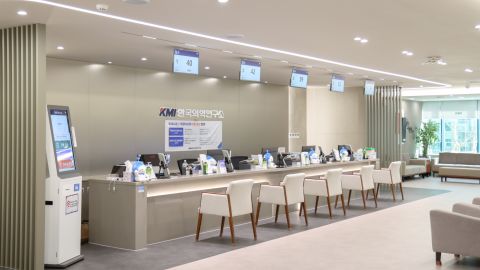
KMI (Korea Medical Institute) — Nationwide Network
National Screening Network — 8 CentersEst. 1985KICS Smart Check-up System3.0T MRI Equipped
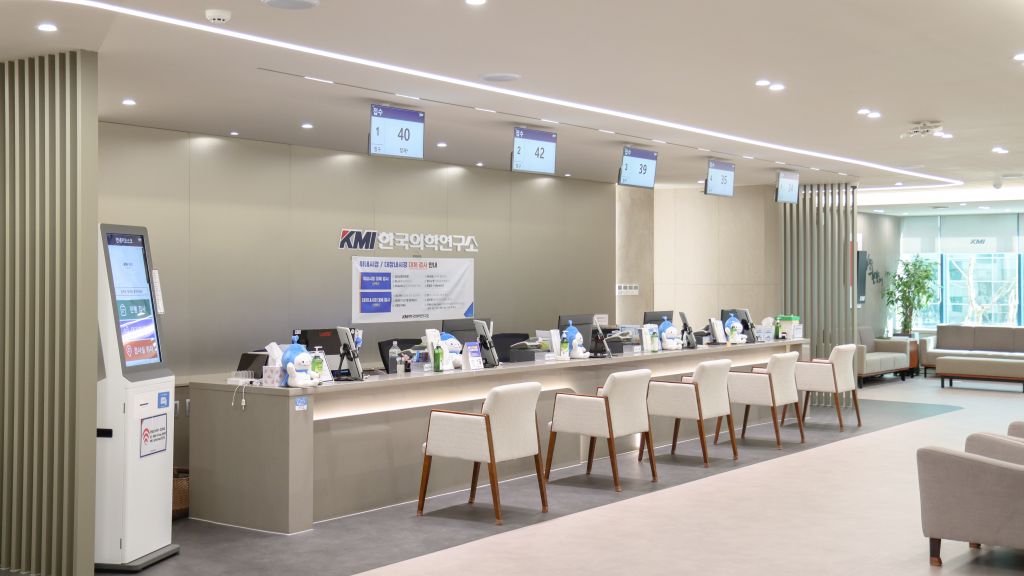
KMI (Korea Medical Institute) operates eight health screening centers across Gwanghwamun, Yeouido, Gangnam, Suwon, Daegu, Busan, Gwangju and Jeju. KMI's official materials describe a smart screening workflow called KICS, introduced in 2021, and list 3.0T MRI among its advanced diagnostic equipment. According to provider-reported KMI data, its screening network reported 3,928 cancer detections in 2024. This is provider-reported operational data, not independent evidence that more extensive screening is appropriate for every patient.
| Branch | |
|---|---|
| Gangnam (Seoul) | Check Availability & Package |
| Gwanghwamun (Seoul) | Check Availability & Package |
| Yeouido (Seoul) | Check Availability & Package |
| Busan | Check Availability & Package |
| Daegu | Check Availability & Package |
| Gwangju | Check Availability & Package |
| Suwon | Check Availability & Package |
| Jeju | Check Availability & Package |
- May suit: Patients whose itinerary spans multiple Korean cities and want access to one nationwide screening network across several destinations.
- Notable services: KICS smart check-up workflow, 3.0T MRI, nationwide screening programs, corporate and individual programs.
Seoul National University Hospital Healthcare System — Gangnam Center
University Hospital AffiliatedSNU Clinical Preventive Medicine ResearchPost-Checkup Dining Program
The Gangnam Center operates within the Seoul National University Hospital Healthcare System and focuses on preventive health screening, follow-up care and clinical preventive medicine. Its facilities include dedicated screening and imaging services, with post-checkup dining options available for patients after examination.
- May suit: Patients who prefer a university-hospital-affiliated screening environment with access to broader hospital resources.
- Notable services: Basic, Precision, and Premium health check-up programs, Premier CEO Program, disease-prevention follow-up clinic.
- Address: 152, Teheran-ro, Gangnam-gu, Seoul.
Ewha Womans University Medical Center — Yangcheon-gu
University Hospital — Specialized CareSpecialized Hospital System
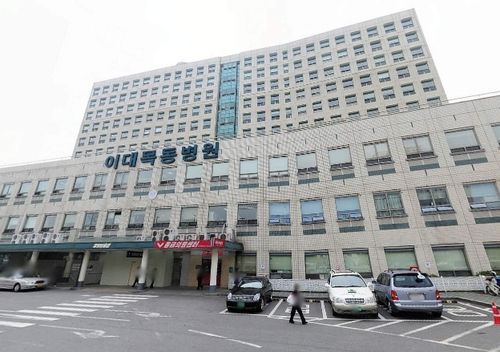
Ewha Womans University Medical Center delivers health checkup services through a specialized hospital system built around patient-centered care. As a university-affiliated medical center, it draws on academic hospital infrastructure and multi-department backup, positioning it as a practical option for patients who want a health checkup Korea appointment backed by a full-service teaching hospital rather than a standalone screening center.
- May suit: Patients wanting university hospital-level multi-department backup alongside their screening.
- Address: 1071, Anyangcheon-ro, Yangcheon-gu, Seoul.
We Want Healthcare — Jung-gu (Myeongdong)
Comprehensive Screening CenterSame-Day Consultation

We Want Healthcare operates a comprehensive screening center in the Myeongdong area, built around modern diagnostic equipment and a customized checkup system designed for early detection of cancer, and cerebrovascular and cardiovascular disease. Its central Jung-gu location — inside the Signature Tower — may be convenient for travelers already staying in or around Myeongdong.
- May suit: Travelers based in Myeongdong who want early cancer and cardiovascular screening without traveling to Gangnam.
- Address: 100, Cheonggyecheon-ro, Jung-gu, Seoul, Signature Tower West 2F.
Chaum Health Clinic — Samseong, Gangnam
CHA Medical Group — Samseong BranchCHA Network & CHA Hospital GroupStay-in Checkup Program Available

For patients researching a VIP checkup Korea experience, Chaum Health Clinic's Samseong branch offers a broad program menu — it operates as part of the wider CHA Network and CHA Hospital Group, alongside affiliated hospitals, research institutes, and a university. Its program menu spans the Prime and Smart general programs through to highly targeted options such as the 10-Major Cancer Precision checkup, Brain Precision checkup, Heart Precision checkup, and a Stay-in Checkup program. Specialized tracks are also available for immune function, menopause, chronic fatigue and stress, and pre-marital health screening.
- May suit: Patients wanting a highly specialized program menu (cancer precision, cardiac, neurological) rather than a single standard package.
- Notable services: 10-Major Cancer Precision checkup, Brain and Heart Precision checkups, Premium Full Body program, Stay-in Checkup program, women's checkup Korea-specific Menopause-Specialized program.
- Address: 509, Teheran-ro, Gangnam-gu, Seoul.
- Hours: Mon–Fri 08:00–16:00 | Sat 08:00–13:00 | Closed Sun and public holidays.
Program Tier Comparison: What Health Check Packages May Include
Package names are not standardized across Korean hospitals. The table below is a planning framework rather than a promise that every center includes every listed test. Always confirm the exact test list before booking.
| Typical Tier | Typical Time | May Include | May Suit |
|---|---|---|---|
| Basic / Standard | Often half-day | Physical measurements, blood and urine tests, ECG, chest X-ray, selected ultrasound and basic gastrointestinal screening depending on the program. | Routine preventive screening with limited time. |
| Comprehensive / Signature | Often half-day to full day | Broader laboratory testing plus selected ultrasound, endoscopy, cardiovascular testing or CT/MRI options depending on risk and package. | Patients seeking a broader review after clinician assessment. |
| Precision / Premium | Full day or longer | More targeted imaging or specialist consultations selected for age, symptoms, family history or known risk factors; some centers also offer stay-in programs. | Patients who need risk-specific or specialist-directed screening rather than simply the largest test bundle. |
How to Match a Health Check Center to Your Priorities
Clinics are listed in no particular order of ranking or preference.
| Priority | Center | Why It May Fit |
|---|---|---|
| Comprehensive screening combined with anti-aging and hormone-focused specialist care | Chaum Clinic | Dedicated Medical and Anti-Aging zones under the CHA Health System with hormone and metabolic specialty services. |
| Same-day testing workflow plus Korean and Western medicine services | Kwangdong Hospital | Hospital-described One Q same-day testing workflow with both Western and Korean medicine services available in the institution. |
| Multi-city itinerary or preference for a nationwide screening network | KMI Nationwide Network | Eight centers across Seoul, Busan, Daegu, Gwangju, Suwon and Jeju. |
| University-hospital-affiliated preventive screening | SNU Hospital Gangnam Center | Operates within Seoul National University Hospital's healthcare system with preventive screening and follow-up services. |
| Specialized cancer, cardiac or neurological program menu | Chaum Health Clinic | Program menu includes cancer-, brain- and heart-focused precision checkup options and stay-in programs. |
How Booking a Korea Health Check Through MTK Works
- Browse & Match: Identify centers that fit your screening goal, location and schedule.
- Submit an Inquiry: Share the requested appointment dates and any relevant health history or prior records you choose to provide.
- Center Review: The center confirms the available package, required preparation and appointment details.
- Confirm & Book: MTK provides the applicable booking and payment instructions after the center confirms availability.
- Screening & Follow-Up: Attend the appointment with language assistance coordinated through MTK where applicable. If follow-up is needed, MTK can help coordinate communication with the treating center.
Health Checkup Preparation, Results and Travel Timing
Before the appointment
- Follow the screening center's exact fasting and medication instructions.
- If colonoscopy is included, bowel preparation is separate from ordinary fasting and must be followed precisely.
- Bring the identification and previous records requested by the center.
- Ask in advance whether sedated endoscopy requires an escort or restrictions on driving, public transport or same-day travel.
After the screening
- Ask when preliminary findings and the full written report will be available.
- Confirm whether the result report can be issued in English and how it will be delivered after you leave Korea.
- If a biopsy, polyp removal or other procedure occurs during endoscopy, follow the treating team's individualized activity and travel instructions.
- Do not assume that a routine health check provides medical clearance for an unrelated elective procedure.
Frequently Asked Questions
Can foreigners get a health checkup in Korea?
Yes. International patients can book preventive screening at Korean medical institutions that accept foreign patients. All hospitals and clinics available through MTK must hold Registered Foreign Patient Attraction Institution status before platform booking access is provided.
How much does a full body health check in Korea cost for foreigners?
There is no single national price. Current published provider examples show many basic-to-comprehensive programs around ₩500,000–₩1,800,000. Premium MRI-rich or high-touch programs can rise to roughly ₩2,600,000–₩7,000,000+, and some stay-in programs exceed ₩6,000,000. Final cost depends on the center, imaging, endoscopy, sedation, specialist consultation, sex/age-specific tests and service level. These are planning bands, not a quote for every institution.
How long does a health checkup in Korea usually take?
Many programs are designed for a half day or full day. Programs with sedated endoscopy, multiple imaging studies, specialist consultations or stay-in options may take longer. Confirm the expected duration before arranging onward travel.
Does a Korea full body health check always include a full body MRI?
No. “Full body health check” is a broad consumer term rather than a standardized package. Some programs include selected MRI examinations, while others rely on laboratory tests, ultrasound, endoscopy, X-ray or targeted CT/MRI based on the program and individual risk.
Do I need Korean health insurance for a health checkup?
International visitors commonly use self-pay screening packages. Korean National Health Insurance eligibility and coverage depend on residency status, the institution and the specific service, so do not assume that a preventive or executive package is covered. Confirm payment and insurance conditions before booking.
Can I get my health checkup results in English?
English-language result availability and report format vary by institution. MTK can help confirm the center's current result format and coordinate language assistance for result review and follow-up where available.
What should I prepare before a health checkup in Korea?
Preparation varies by program. Fasting may be required before blood tests, abdominal imaging or endoscopy, while colonoscopy requires separate bowel preparation. Follow the exact instructions issued by the screening center, particularly for diabetes medication, anticoagulants and sedated endoscopy.
Can I have gastroscopy or colonoscopy during a Korea health checkup?
Many comprehensive screening programs offer gastroscopy and some offer colonoscopy, but inclusion, sedation, preparation, pathology and procedure policies vary. Confirm exactly what is included before booking and follow the center's preparation instructions.
Can I fly after a health checkup in Korea?
A routine non-sedated screening does not automatically prevent air travel, but the answer can change if sedation, biopsy, polyp removal, contrast imaging or an abnormal finding occurs. Policies can be strict: KMI Global, for example, tells patients not to fly for two weeks after biopsy or polyp removal during endoscopy. That is a provider-specific instruction rather than a universal rule, so follow the treating center's guidance and leave appropriate travel buffer.
How long do health checkup results take in Korea?
Turnaround varies by center and by the tests performed. Preliminary discussion may be available sooner than a complete written report, while pathology or additional specialist review can take longer. Confirm result timing and delivery method if you will leave Korea soon after screening.
Are there women's and men's health screening programs in Korea?
Yes. Programs may include gynecological ultrasound, cervical or breast screening, prostate-related testing or other age- and risk-specific examinations. The exact test list varies by center and should be matched to individual risk rather than selected solely by sex.
What can cancer screening in Korea include?
Cancer screening may combine laboratory testing, endoscopy, ultrasound and targeted imaging, but the correct tests depend on age, sex, family history, symptoms and previous screening. More tests do not automatically mean better screening; the plan should be matched to individual risk and clinician assessment.
Can I combine a health checkup with other medical treatment during the same Korea trip?
Sometimes, but the timing should be coordinated separately with each treating medical team. A general screening result should not be assumed to provide medical clearance for an unrelated elective procedure. MTK can help coordinate multi-clinic itineraries and language assistance across specialties.
Will I need follow-up after I return home?
Follow-up depends on the results and the center. If further discussion is needed after you return home, MTK can help confirm the center's available follow-up method and coordinate language assistance where applicable. Clinical interpretation remains the responsibility of the treating medical team.
Related Medical Travel Guides
- Urology in Korea: Men's Health, Prostate & Urinary Care for Foreigners (2026 Guide)
- Top 15 Eye Clinics in Korea for Foreigners (2026 Guide)
- Specialist Medical Care in Busan, Korea (2026 Guide)
- Jeju Medical Travel: Skin, Dental & Checkups (2026)
Medical and Official References
- KMI Global — Foreigner Health Checkup Programs, Specialty Packages and Add-on Prices
- We Want Healthcare — Custom Comprehensive Health Checkup Prices
- We Want Healthcare — Signature and Premium Health Checkup Prices
- Chaum — Basic and Specialized Health Checkup Program Prices
- Chaum — Premium and Stay-in Health Checkup Program Prices
- American College of Radiology — Statement on Screening Total Body MRI
- U.S. Food and Drug Administration — Full-Body CT Scans: What You Need to Know
- U.S. National Cancer Institute — Tumor Markers in Common Use
- National Cancer Center Korea — Cancer Screening Guide
- Medical Korea — Registration System for Institutions Attracting Foreign Patients
- U.S. Preventive Services Task Force — Colorectal Cancer: Screening
Medical Disclaimer: This guide is for informational purposes only and does not constitute medical advice. A “full body health check” is not a standardized medical protocol, and individual screening decisions should be based on age, symptoms, medical history, family history, previous results and clinician assessment. CT uses ionizing radiation, and indiscriminate whole-body imaging can lead to incidental findings and unnecessary follow-up. All hospitals and clinics available through MTK are required to hold Registered Foreign Patient Attraction Institution status before platform booking access is provided. Clinics are listed in no particular order of ranking or preference. Clinical suitability and the final screening plan must be determined by the treating medical team.